

Types of Artificial Grass: A Complete Guide to Choosing the Right Turf
Artificial grass has evolved into a versatile solution used across residential, commercial, and sports applications. While it may look similar at first glance, different types of artificial grass vary significantly in materials, structure, appearance, and performance.
Understanding these differences is essential if you want to choose the right turf for your project. In this guide, we break down the main types of artificial grass and explain how to select the best option based on your needs.
In this article:
What Are the Main Types of Artificial Grass?
Artificial grass can be categorized in several ways, but the most practical approach is to look at it from three key perspectives: application, material, and fiber structure.
- By application: residential, commercial, sports turf, playgrounds, pet areas, and putting greens
- By material: polyethylene (PE), polypropylene (PP), nylon
- By fiber structure: monofilament, fibrillated, curly yarn
Understanding these categories makes it easier to compare options and choose the right artificial grass for your specific needs.
Types of Artificial Grass by Application
Artificial grass is most commonly classified by application, as different use cases require distinct performance characteristics.
Residential Turf
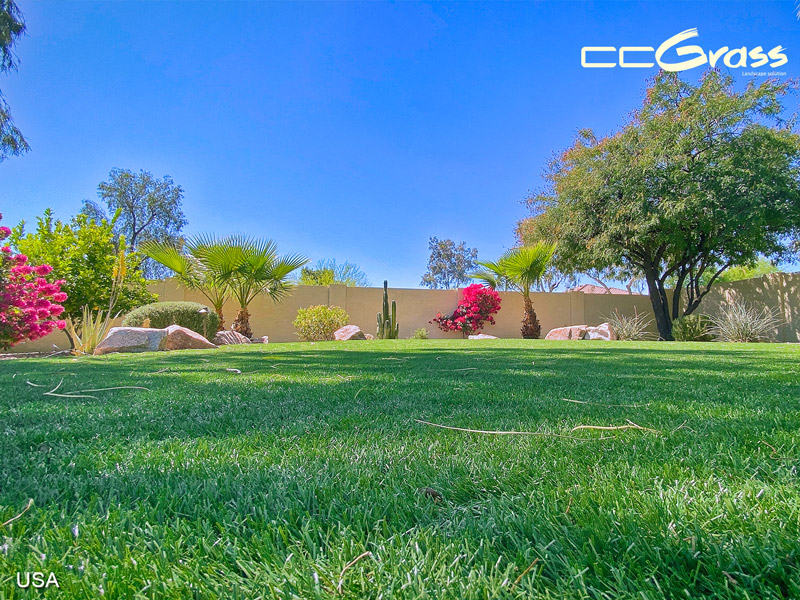
Residential artificial grass is ideal for gardens, backyards, and private outdoor spaces. It is designed to provide a soft, realistic lawn that stays green year-round with minimal upkeep.
- Medium to long pile height for a natural look and feel
- Multi-tone color blends for realism
- Soft, comfortable surface for daily use
To achieve a natural-looking lawn, see our guide on the most realistic artificial grass.
Commercial Landscape Turf
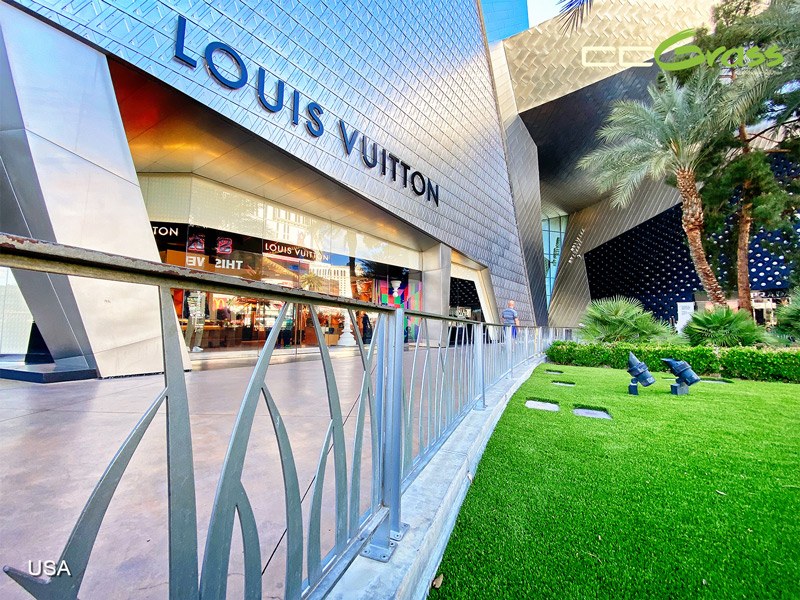
Commercial turf is used in offices, public areas, and urban landscapes where durability and consistent appearance are essential. It is built to handle moderate to heavy foot traffic while maintaining visual appeal.
- Enhanced durability for high-traffic environments
- Consistent appearance across large areas
- Low maintenance for long-term cost efficiency
Playground Turf
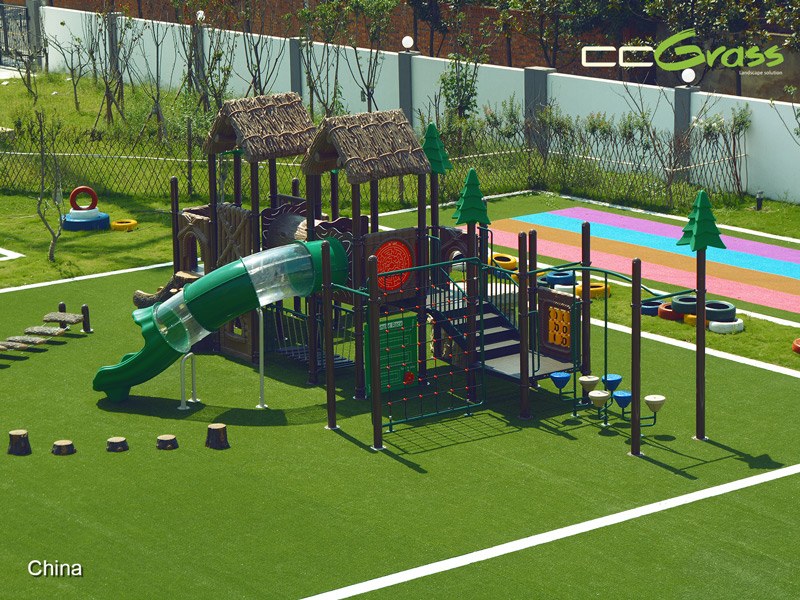
Playground turf is designed to create safe and durable play environments for children. It provides a clean, mud-free surface while helping reduce the risk of injury during active play.
- Shock-absorbing systems to cushion falls
- Durable fibers for heavy use
- Non-toxic and easy-to-clean surface
For a deeper look at safety and selection, check our guide to choosing artificial grass for playgrounds.
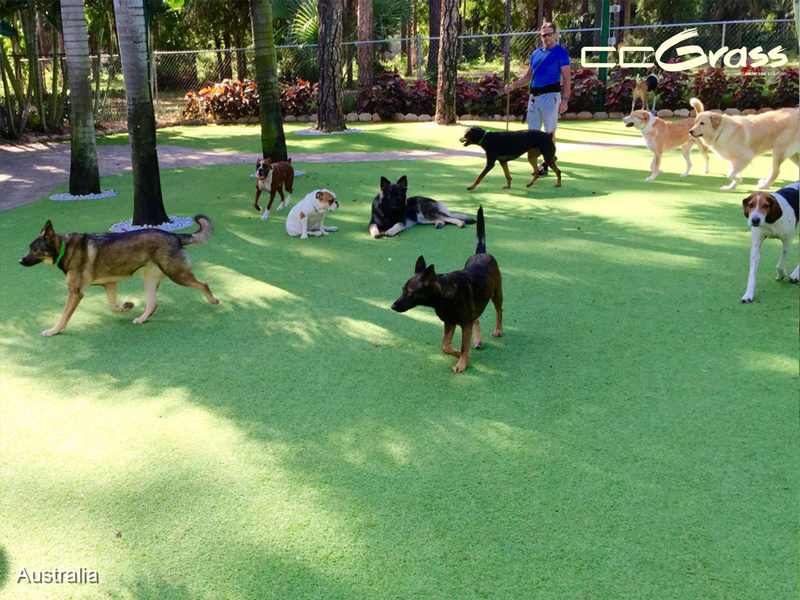
Pet-Friendly Turf
Pet turf is engineered for hygiene, durability, and easy maintenance. It helps keep outdoor spaces clean while withstanding frequent pet activity.
- Excellent drainage to prevent odor buildup
- Durable fibers resistant to digging and wear
- Easy cleaning and low maintenance
If you’re considering turf for pets, read our detailed guide on artificial grass with dogs pros and cons.
Putting Green Turf
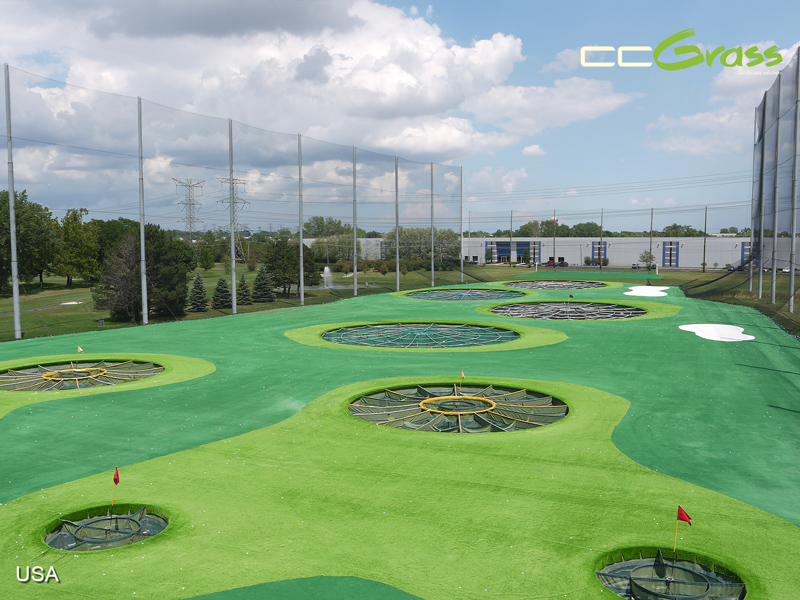
Putting green turf is designed to replicate the performance of natural golf greens, offering a smooth and consistent playing surface.
- Short, dense fibers for accurate ball roll
- Stable surface for precision play
- Suitable for both residential and professional use
To better understand how to select and install the right surface, explore our artificial putting green turf guide.
Sports Artificial Turf
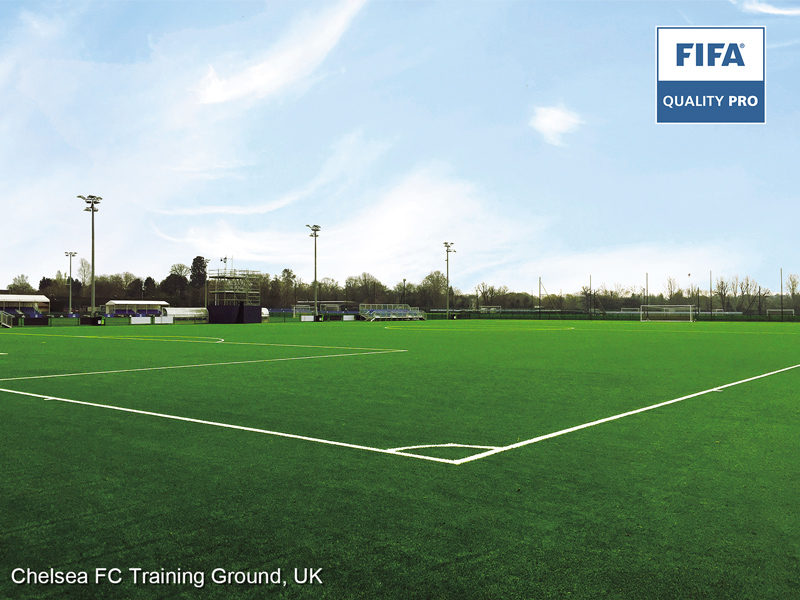
Sports turf is engineered for performance, durability, and player safety. Unlike landscaping grass, it is designed to meet the specific demands of different sports.
Different systems are developed for football, rugby, hockey, tennis, and other sports, each requiring specific performance characteristics such as shock absorption, traction, and ball behavior.
- High durability for intensive use
- Consistent playing performance
- Designed to meet sport-specific standards
See our detailed breakdown of artificial turf types for sports fields.
Types of Artificial Grass by Material
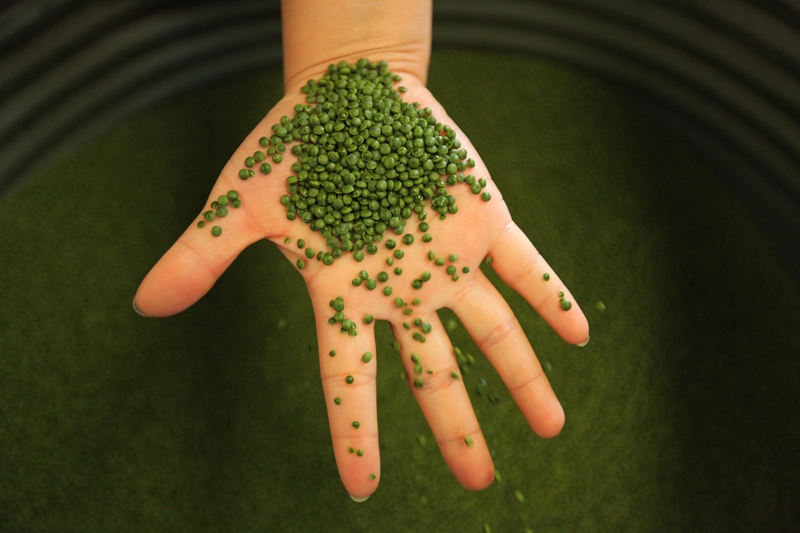
The material used in artificial grass fibers plays a major role in determining durability, softness, and cost.
Polyethylene (PE)
Polyethylene is the most widely used material in modern artificial grass. It offers an excellent balance between softness, durability, and visual appeal. Its natural look and comfortable feel make it a popular choice for both landscaping and sports applications.
Polypropylene (PP)
Polypropylene is a more affordable option, but it is generally less durable than polyethylene. It is often used in low-traffic areas or as part of the thatch layer in landscaping turf.
While lightweight and cost-effective, it is less resistant to heat and heavy use.
Nylon
Nylon is the strongest and most durable type of artificial grass material. It can withstand high temperatures and heavy loads without losing its shape.
However, it tends to be stiffer and more expensive, so it is typically used in specialized applications such as putting greens and other high-wear surfaces.
Types of Artificial Grass by Fiber Structure
Beyond materials, the structure of the fibers plays a key role in how artificial grass performs, influencing durability, resilience, appearance, and suitability for different applications.
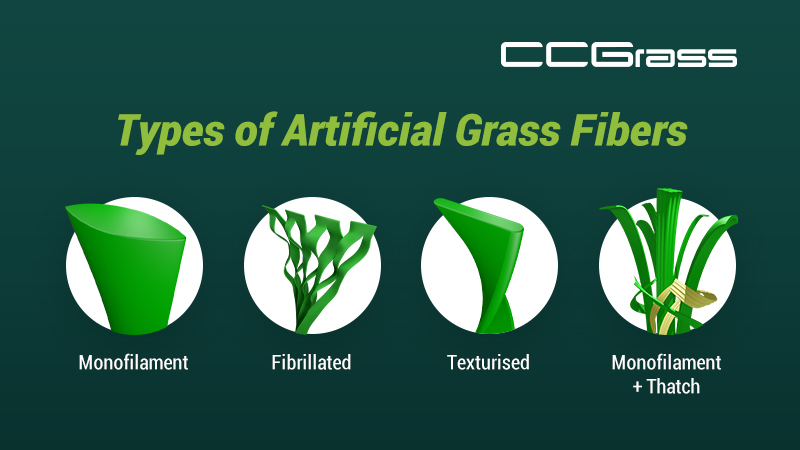
Monofilament Grass
Monofilament yarn is the most widely used and versatile type of artificial grass fiber, applied across both sports and landscaping applications.
One of their key advantages is the ability to be engineered into different shapes. For example, diamond-shaped fibers tend to offer greater strength and durability, while C-shaped or S-shaped designs enhance softness for a more comfortable feel. Shapes such as V-shaped or W-shaped fibers improve resilience, helping the grass blades recover quickly after heavy use.
In sports turf, these engineered shapes are often used to optimize performance characteristics such as durability, traction, and ball behavior. In landscaping applications, different yarn shapes are frequently combined to achieve a more natural appearance while balancing comfort and wear resistance.
Fibrillated Grass Fiber
Fibrillated fibers feature a mesh-like structure that gradually splits into multiple strands during use. This design helps to effectively hold infill in place, improving surface stability.
They are typically a more cost-effective option and are widely used in applications such as tennis courts, recreational sports fields, and playgrounds, where durability and functionality are important but extreme performance is not always required.
Texturised Yarn (Curly Fiber)
Texturised yarn, often referred to as curly fiber, is produced through a texturising process that creates a curled or crimped structure. Unlike upright monofilament fibers, these yarns form a dense, compact surface.
This type of fiber is commonly used in sports such as hockey, tennis, padel, and putting greens, where a low, stable, and uniform playing surface is required. It helps control ball speed and ensures consistent interaction between the ball and the turf.
Thatch Layer
The thatch layer is a secondary fiber layer used mainly in landscaping artificial grass. It typically consists of shorter fibers in natural tones such as light green, yellow, and brown, designed to replicate the underlying layer of real grass.
Its primary role is to enhance visual realism by mimicking natural variation, while also adding support to the upright fibers and improving the overall fullness of the turf.
How to Choose the Best Artificial Grass
Selecting the right artificial grass can make a significant difference in performance, appearance, and durability. The key is to evaluate the intended use, environmental conditions, project requirements, and budget before making a decision.
Here’s a practical guide to help you choose:
Consider the Primary Application
- Sports Turf: Prioritize durability, resilience, and consistent playing performance. Look for systems that meet recognized standards such as FIFA, FIH, World Rugby, ITF, or FEP.
- Residential or Commercial Landscaping: Focus on natural appearance, softness, and UV resistance to maintain long-term visual appeal.
- Playgrounds & Pet Areas: Emphasize safety, durability, drainage, and ease of maintenance to ensure a clean and long-lasting surface.
- Putting Greens: Require precision, smoothness, and consistent ball roll for optimal playability.
Match the Right Fiber Structure & Material
- For high-performance sports fields: Polyethylene (PE) monofilament fibers are widely used for their strength and resilience. They can also be combined with texturised yarn or fibrillated fibers in advanced turf systems to help control infill movement and improve surface stability.
- For recreational or multi-use areas: Fibrillated fibers offer a more cost-effective solution while still delivering reliable durability and infill retention.
- For landscaping applications: Combining monofilament fibers with a thatch layer helps achieve a balance between natural appearance, comfort, and wear resistance.
- For precision sports surfaces (hockey, tennis, padel, putting greens): Texturised monofilament yarn is commonly used to create a dense, stable surface for controlled ball interaction.
Check Pile Height & Density
- Shorter piles (10–25 mm): Ideal for high-traffic areas, putting greens, playgrounds, and pet zones.
- Medium to long piles (30–50 mm+): Better suited for residential lawns or commercial landscapes where comfort and a lush appearance are priorities.
- Higher density (face weight): Generally improves durability and provides a more natural look and feel.
Evaluate Color Requirements
- Although green is the standard for most artificial grass applications, color selection may vary depending on functional or design requirements.
- In sports such as hockey, tennis, and padel, non-green surfaces (such as blue) are often used to enhance ball visibility and improve player focus.
- For playgrounds, colored turf options help create more engaging and visually stimulating environments.
- The right color choice can enhance both functionality and overall user experience.
Consider Environmental Factors
- Sunlight & Heat: Polyethene fibres offer better heat resistance, while polypropylene is less suitable for high-temperature environments.
- Drainage & Moisture: Ensure the backing and system design provide efficient drainage, especially for pet areas and playgrounds.
- Climate & Maintenance: Choose UV-stabilised products for sunny regions and easy-clean systems for high-use areas.
Infill, Backing & Shock Pad
- Infill: Helps support fibers, improve cushioning, and maintain surface stability. Common options include silica sand, rubber, zeolite, and organic alternatives. Some modern systems are designed without infill, offering a cleaner and lower-maintenance solution for specific sports applications.
- Backing: A high-quality dual-layer backing system improves durability, dimensional stability, and drainage performance.
- Shock Pad (Optional): Often used in sports fields and playgrounds to enhance shock absorption, improve player comfort, and reduce injury risk.
Conclusion
Understanding the different types of artificial grass is the first step toward making the right choice. From materials and fiber structures to application-specific systems, each option is designed to meet different performance and aesthetic needs.
By evaluating your intended use, environmental conditions, and technical requirements, you can select a solution that delivers long-term durability, consistent performance, and natural visual appeal.
For more accurate decision-making, it is recommended to seek advice from experienced turf professionals and review turf samples based on your specific project requirements.