

Mini Soccer Field Dimensions, Layout Planning & Turf System Guide (2026)
As cities become denser and available land grows increasingly limited, the demand for compact sports facilities continues to rise. Mini soccer fields have emerged as a practical response, supporting 3v3 to 7v7 formats within constrained urban environments.
From school campuses and rooftop developments to indoor academies and commercial sports hubs, these smaller pitches are redefining how football space is planned and utilized.
Designing a mini soccer pitch, however, requires more than simply adjusting dimensions. Reduced playing areas intensify ball contact, player movement, and surface wear.
This guide explores the key dimensions, turf system choices, and real-world design considerations behind successful mini soccer fields.
In this article:
What Is a Mini Soccer (Football) Field?
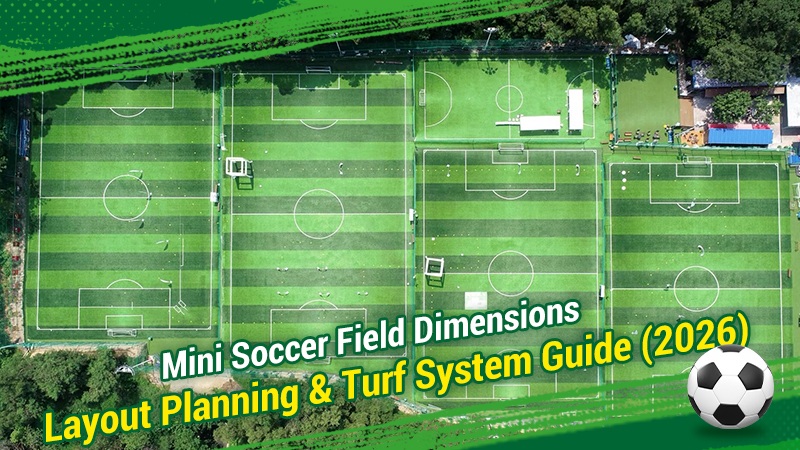
A mini soccer field is a compact football pitch specifically designed for small-sided games such as 3v3, 5v5, and 7v7. Unlike traditional 11-a-side fields, mini pitches are built to fit space-constrained environments, including schools, indoor sports halls, commercial rooftops, community centers, and urban sports complexes.
These smaller formats prioritize frequent ball contact and technical skill development. The reduced player count and limited playing area encourage faster decision-making, close control, and continuous passing sequences, making mini soccer fields particularly suitable for youth training programs and grassroots development.
From a commercial perspective, mini pitches also support high usage rates and flexible booking models, allowing operators to maximize space efficiency and revenue potential.
Sizing recommendations are flexible and may vary by age group and competition level. Organizations such as FIFA and national associations like The FA provide adaptable guidelines for small-sided formats, ensuring safety and playability across different applications.
Mini Soccer Field Dimensions & Spatial Planning Principles
Mini soccer pitch dimensions form the spatial framework of the game. While size ranges provide useful reference points, effective planning goes beyond raw numbers. Designers must consider movement intensity, safety clearance, and how space functions within compact environments such as community courts, rooftops, or indoor facilities.
Recommended Size Ranges by Game Format
For a clear reference, here’s a general overview of recommended size ranges.
These ranges reflect common planning references used in mini pitch projects. Final dimensions often vary depending on available space, safety margins, and local association guidelines.
| Game Format | Recommended Size (L × W) | Minimum (L × W) | Maximum (L × W) |
| 3-a-side | 20m × 15m | 15m × 10m | 25m × 18m |
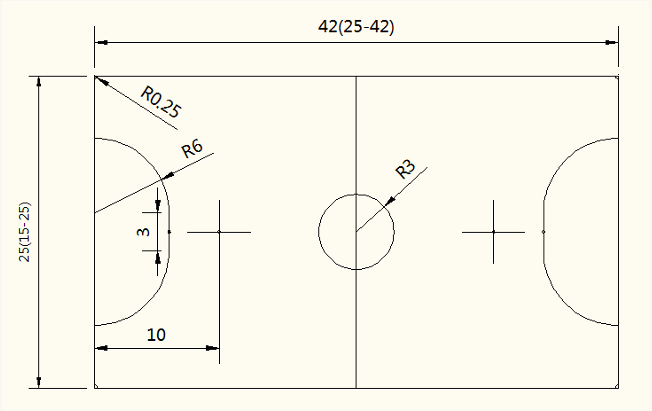
| 5-a-side | 30m × 20m | 25m × 15m | 42m × 25m |
| 7-a-side | 50m × 30m | 45m × 25m | 60m × 35m |
Indoor Soccer Field Dimensions Considerations
Indoor soccer field dimensions typically follow similar proportional ranges to outdoor mini pitches, but structural elements—such as ceiling height and support columns—often dictate the final layout.
For commercial 5-a-side indoor facilities, dimensions commonly range from 30m × 15m to 40m × 20m. While a clear ceiling height of 7 meters is ideal for an unobstructed ball trajectory, many successful urban retrofits operate effectively with a 5 to 6-meter clearance.
When using perimeter rebound boards or cage systems, their thickness must be factored into the total project footprint to ensure the playing area remains balanced.
Aspect Ratio
An aspect ratio close to 1.5:1 is generally preferred, as it supports balanced play across both length and width. Overly narrow layouts may create congestion, while excessive width can reduce game intensity. In both outdoor and indoor soccer field dimensions planning, proportional design often proves more important than maximizing size.
Safety Margins & Run-Off Zones
Compact fields require careful buffer planning.
- A 1–2 meter run-off zone should surround the playing area.
- The distance from touchline to fencing or walls must exceed this safety margin.
- Indoor and rooftop environments must factor structural constraints into total footprint calculations.
Dimensions define the physical limits of play. Once those limits are set, the next step is clarifying the practical performance and usage requirements the pitch must satisfy.
From Dimensions to Performance: What Really Matters
Once the physical footprint is defined, the focus shifts to how the surface will handle the reality of daily play. For mini pitches, “quality” is defined by three real-world factors:
Usage Intensity & Wear Concentration
Mini pitches suffer significantly higher wear per square meter compared to full-size fields. Because the space is limited, movement patterns—such as pivoting and sudden stops—are concentrated in the same areas. System durability and surface stability must therefore be evaluated based on your expected usage frequency (e.g., 10+ hours of daily rental) rather than game format alone.
Performance Alignment: Professional vs. Community Standards
The choice of a turf system should reflect the specific competitive level and usage intensity of your facility.
- Professional & Academy Standards: Aimed at elite training and high-stakes commercial centers. As a FIFA Preferred Provider, CCGrass systems meet the rigorous requirements of the FIFA Quality Programme. This ensures the surface excels in all critical performance benchmarks—including ball roll, vertical ball rebound, shock absorption, and skin friction—delivering professional-grade playability to any mini-pitch environment.
- Community & Multi-Use Standards: For residential projects, primary schools, or lower-intensity recreation, the priority shifts toward a balance of long-term durability, soft-touch comfort, and high UV resistance, ensuring the field remains a functional and aesthetic asset for years.
Environment & Structural Constraints
- Rooftop Specifics: Weight is the primary constraint. Rooftop projects require lightweight, modular systems that provide excellent drainage without exceeding the building’s load-bearing limits.
- Indoor Air Quality: For indoor arenas, the focus is on cleanliness. Systems that minimize dust and “infill splash” help maintain better air quality and reduce the burden on HVAC systems.
Selecting the Right Turf System for Your Mini Pitch
Choosing the right turf system comes down to balancing playability, environmental factors, and budget. At CCGrass, we leverage our proven football technologies to meet the high-intensity demands of small-sided fields.
Infilled Systems: Performance & Practicality
Infilled systems remains a global benchmark for providing a classic football match experience.
- Elite Monofilament Yarns: Utilizing premium fibers like our Superb or Ultrasport series, these systems are engineered for high-intensity movement and resilience. Their specific shapes and thicknesses ensure a “memory effect” that helps fibers spring back upright even under heavy, daily use.
- Basic Fibrillated Yarns: For projects where budget is the absolute primary consideration, fibrillated (net-structured) systems offer a durable, entry-level alternative. These are typically used for basic recreational spaces or simple multi-use areas.
- Best For: Youth academies and commercial small-sided football centers (Monofilament); basic community recreation and entry-level multi-use areas (Fibrillated).
Non-Infill System: Innovation & Versatility
The Leap series offers a high-performance alternative for facilities where traditional infill may be impractical or environmental factors are a primary concern.
- The Technology: It features SpringRoot Tech, a structure of durable straight yarns combined with double-layered curly yarns. This design ensures the system maintains its performance values without the need for granular infill.
- The Advantage: By eliminating “rubber splash,” Leap simplifies maintenance and is an ideal solution for indoor arenas (improving air quality) and rooftop pitches (reducing weight), while offering an eco-friendly choice for sustainable projects.
- Best For: High-standard school courts, indoor commercial hubs, and rooftop installations.
Enhancing Safety with a Shock Pad
Regardless of the yarn or infill type, we highly recommend incorporating a shock pad layer. This layer ensures consistent shock absorption across the entire pitch, which is essential for player safety and joint protection—particularly in mini-football where repetitive, high-impact movements are concentrated in a small area.
Real-World Mini Soccer Pitch Applications
With projects delivered across schools, commercial facilities, and international football initiatives, CCGrass has built mini soccer pitches in a wide range of environments.
These projects show how design priorities shift depending on usage intensity, location constraints, and community goals.

FIFA Arena Projects
CCGrass has delivered multiple pitches for the FIFA Arena initiative across different countries. These projects highlight the growing demand for durable, safe, and sustainable mini-pitch systems designed for frequent youth play.
In several installations, our Leap non-infill system was selected to support these goals while providing a clean, low-maintenance surface.

Homeless World Cup & Social Impact Projects
Temporary or event-based mini pitches—such as those used in the Homeless World Cup—highlight the need for adaptable, reliable systems that can be installed efficiently while still delivering professional-quality playability.
Commercial Football Centers
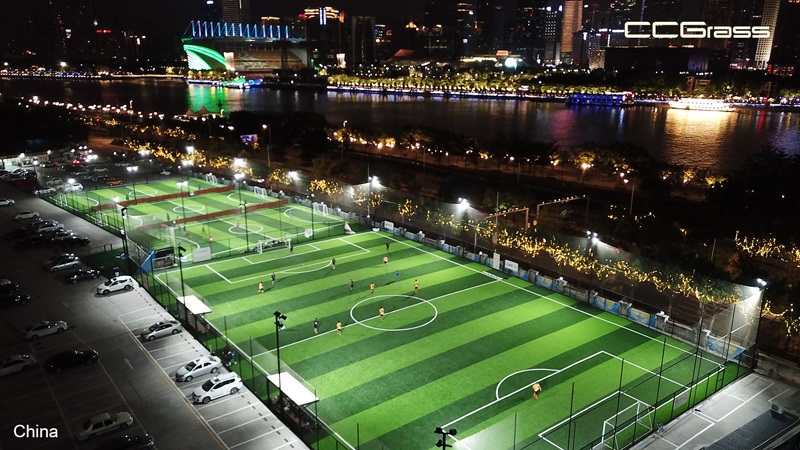
High-turnover commercial facilities often operate pitches for long hours daily. In these environments, durability and surface stability are critical to maintain consistent play despite intensive usage.
Rooftop Installations
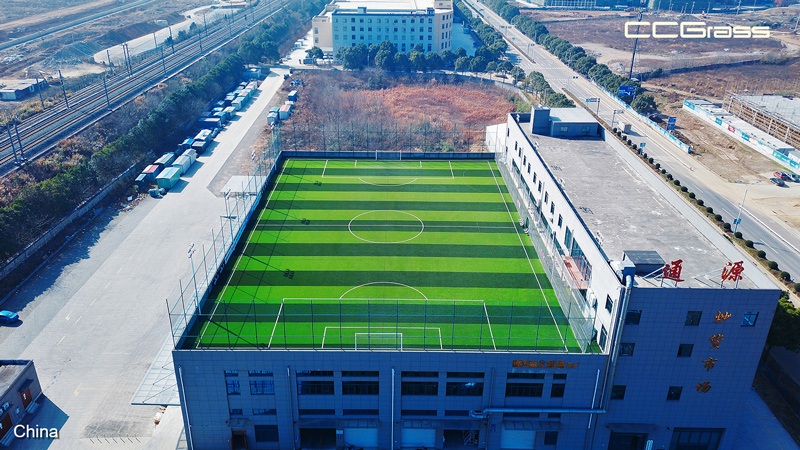
Critical for these projects are lightweight base systems, non-infill turf, and robust perimeter solutions. Design must meticulously manage structural load, wind resistance, and effective drainage without impacting the building below.

School & Community Pitches
For schools and local communities, the focus is on safety, multi-functional design, and long-term usability. These pitches are typically designed to support multi-age users and frequent recreational play, maximizing community engagement and value.
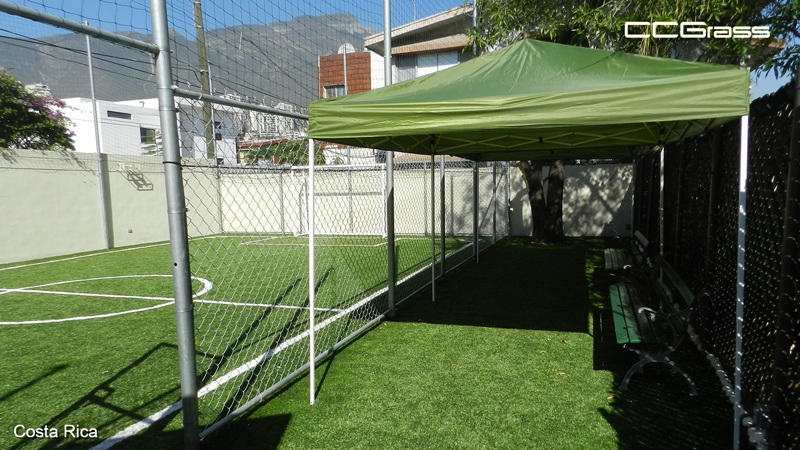
Backyard & Private Use
Private mini pitches prioritize ease of installation, budget-friendly solutions, comfort, and moderate durability, creating compact football spaces for casual play and family recreation.
Conclusion
Mini soccer fields are becoming an increasingly important solution for football development, especially in space-constrained environments such as schools, rooftops, indoor facilities, and community sports hubs.
By making better use of limited space, these compact pitches allow more players to enjoy the game while supporting various training and recreational formats.
Designing a successful mini soccer field requires thoughtful planning—from choosing appropriate dimensions to understanding key performance factors and selecting the right turf system for real-world use.
Need information on dimensions for a standard football field? Our comprehensive guide to football field dimensions has you covered.
Ready to start your mini soccer field project? Contact CCGrass for expert guidance and a tailored turf solution that fits your specific needs.