
Artificial grass is a popular solution for homeowners seeking a low-maintenance, evergreen lawn. However, professional installations can be expensive, leading many people to search for the cheapest way to lay artificial grass without sacrificing durability or appearance.
This guide explains practical, budget-friendly strategies—from choosing cost-effective turf materials to simplifying installation—so you can create a durable artificial lawn while keeping total costs under control.
In this article:
At a Glance: Top Ways to Save Money on Artificial Grass Installation
If you’re searching for the cheapest way to lay artificial grass, focus on reducing costs in three key areas: materials, labor, and long-term durability.
| Cost Factor | Key Cost-Saving Strategies |
| Material Costs | Choose shorter pile polyethylene (PE) turf, buy remnants or bulk rolls, and avoid unnecessary layers such as foam underlays. |
| Labor Costs | Handle site preparation and installation as a DIY project, using galvanized nails or U-pins instead of adhesives. Rent specialized tools instead of buying them. |
| Long-Term Savings | Prevent costly mistakes by ensuring proper drainage, accurate measurements, and simple maintenance like brushing and rinsing. |
Artificial Grass Installation Cost Breakdown
Understanding the cost structure is the first step toward saving money. The table below compares typical professional installation costs with a DIY budget approach.
| Expense Category | Professional Installation (Per Sq. Ft.) | DIY / Budget Strategy (Per Sq. Ft.) | The Real Difference |
| Artificial Turf (Material) | $1.50 – $6.00 | $1.50 – $6.00 | Prices are usually similar; savings come mainly from choosing practical turf specifications. |
| Sub-Base Materials | $2.50 – $5.00 | $1.00 – $2.50 | DIYers can choose budget-friendly base materials and control quantities to reduce overall costs. |
| Installation Labor | $6.00 – $12.00 | $0 – $2.00 | Full DIY eliminates labor costs entirely, while partial DIY reduces contractor fees. |
| Infill & Accessories | $1.50 – $3.00 | $0.80 – $1.50 | Budget installations use minimal silica sand infill and fewer accessories. |
| Estimated Total | $11 – $26 | $3.30 – $12 | Potential savings: 35% – 60% with DIY installation. |
As the comparison shows, DIY installation can significantly reduce total costs. For a full walkthrough of the process, see our step-by-step guide to install artificial grass.
Understanding these cost factors helps you identify where the biggest savings come from. The following sections outline practical steps to achieve the cheapest way to lay artificial grass without compromising durability.
Choose Affordable Artificial Grass for Your Project
The foundation of an affordable installation lies in choosing the right turf. Understanding the yarn material properties and their impact on cost ensures you avoid overspending on unnecessary features.
Prioritize Shorter Pile Heights
Shorter pile heights (20–35mm) are inherently cheaper than longer, denser varieties. These styles are ideal for decorative areas, patios, or low-traffic zones. While they lack the plushness of premium turf, they provide a clean, uniform appearance and require less infill material.
Opt for Polyethylene-Based Turf
Polyethylene (PE) turf strikes an ideal balance between durability, comfort, and cost-effectiveness. Softer than nylon and more affordable than hybrid blends, PE turf is a popular choice for residential lawns and recreational areas. It offers a natural appearance and reliable performance, making it a practical and attractive option for everyday use.
Consider Remnants or Bulk Purchases
Local artificial grass suppliers often sell remnants from larger projects at discounted rates. Measure your area accurately and inquire about leftover stock that matches your dimensions. For larger projects, buying turf in bulk rolls reduces waste and per-square-foot costs.
DIY Site Preparation: Cutting Labor Costs
Professional groundwork accounts for up to 50% of turf installation expenses. Tackling this step yourself is central to the cheapest way to lay artificial grass, saving hundreds while ensuring quality.
Efficient Removal of Existing Vegetation
Clear the area thoroughly to prevent organic matter from decomposing under the turf, which can cause unevenness. Use a sod cutter for large lawns or a shovel for smaller spaces. Dispose of debris responsibly to avoid additional fees.
Building a Stable, Affordable Base
A compacted base is essential for proper drainage and long-term durability of artificial grass. Choosing the right base material is also one of the most effective ways to control installation costs.
For budget installations, CMB (Crushed Miscellaneous Base), a recycled aggregate material, is typically one of the most cost-effective sub-base options. These aggregates contain a mix of crushed stone and fines that compact tightly, creating a stable surface with reliable drainage for residential artificial grass projects.
In many areas, locally sourced crushed aggregates can provide a similarly affordable option. The key is choosing a material that compacts well while keeping costs low.
Begin by excavating the soil to a depth of 3–4 inches, then spread the base material evenly and compact it thoroughly using a rented plate compactor. A properly compacted base creates a firm, level surface that prevents shifting and promotes effective water runoff.
This approach balances affordability with structural integrity, ensuring a durable foundation for your artificial lawn.
Simplifying Drainage Solutions
While proper drainage is non-negotiable, complex systems aren’t always needed. Slope the base at a 1–2% grade away from structures. For clay-heavy soils, mix sand into the base layer to improve permeability.
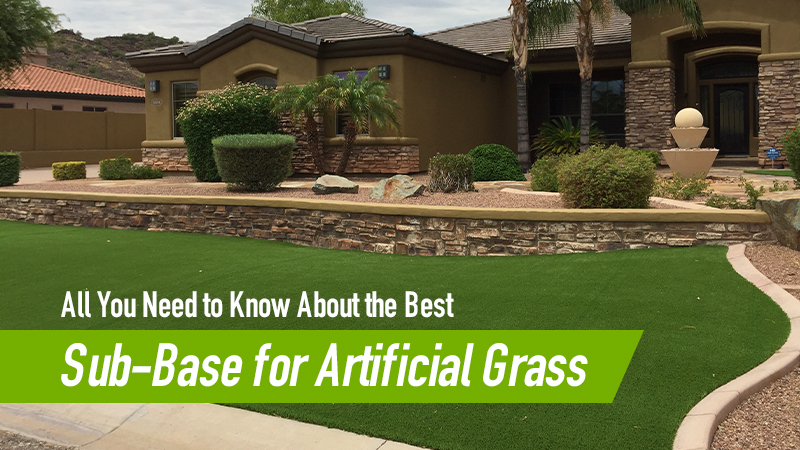
Want to dive deeper into proper groundwork? See the guide below for everything you need to know about sub-bases.
Streamlining the Installation Process
Professional installers often include optional layers that inflate costs. Focus on essential steps to maintain quality while minimizing expenses.
Eliminating Non-Essential Layers
Streamlining your installation by omitting non-critical layers reduces costs without sacrificing functionality. Weed barriers, such as landscape fabric, are only necessary in areas prone to invasive weeds or uneven soil, and may be redundant in urban settings with controlled substrates.
Similarly, foam underlays—designed to add cushioning for play areas or high-traffic zones—are unnecessary for standard residential lawns, where a well-compacted base provides sufficient support. By focusing on essential layers, you avoid overspending on materials that offer minimal practical benefit for everyday use.
Securing Turf Without Adhesives
Avoiding adhesives and specialized tapes not only reduces costs but also simplifies the installation process. Instead, secure the artificial grass by using galvanized landscape nails or U-pins spaced 4–6 inches apart along the perimeter to anchor the turf firmly.
For seams, overlap adjacent sections by 1–2 inches, fasten them with nails, and carefully brush the fibers in the same direction to create a seamless, natural appearance. This method ensures stability without compromising aesthetics, making it both practical and cheap.
Minimizing Infill Material
While infill is essential for stabilizing turf fibers and enhancing durability, excessive application unnecessarily inflates costs, particularly for low-traffic lawns.
Opt for silica sand—the most economical infill option—applying it sparingly at a rate of 1–1.5 pounds per square foot to maintain resilience without waste.
Use a drop spreader to distribute the sand evenly across the surface, then vertically brush the turf with a stiff broom to work the granules deep into the base, ensuring consistent support and natural-looking fiber alignment. This targeted approach maximizes cost efficiency while preserving the turf’s functionality and appearance.
Renting Tools vs. Buying
For one-time projects, investing in specialized tools can be impractical; instead, consider renting equipment to minimize upfront costs. A plate compactor is essential for properly compressing the base layer to ensure stability, while a carpet kicker adjusts turf tension to achieve a smooth, wrinkle-free finish.
For larger areas, a power broom efficiently brushes infill material into the turf for optimal performance, though it may be optional for smaller lawn projects. Renting these tools provides cost-effective access to professional-grade results without long-term ownership expenses.
Avoiding Costly Mistakes
To avoid wasted materials and premature wear, meticulous attention to detail is critical. Begin by ordering 10–15% more turf than your measured area to accommodate trimming around edges or obstacles, and use a sharp utility knife with a straight edge for precise cuts.
Before finalizing the installation, test drainage by spraying water on the compacted base layer to identify pooling areas, adjusting the slope as needed.
For long-term durability, maintain the grass lawn by brushing it monthly with a stiff broom to prevent matting, rinsing periodically to remove debris, and inspecting seams and edges annually to promptly re-secure loose sections. These steps ensure a professional finish and extended lifespan for your artificial grass installation.
Long-Term Savings through Durability
Investing in quality turf and precise installation techniques significantly extends the lifespan of artificial grass installations, minimizing long-term replacement costs.
For instance, a well-compacted base prevents shifting and uneven wear, ensuring the turf remains stable for years. Similarly, choosing UV-resistant turf for outdoor spaces helps preserve color vibrancy in sun-drenched climates, delaying fading and reducing the need for premature replacement.
These choices reinforce the cheapest way to lay artificial grass over time, making them essential for cost-conscious, long-lasting installations.
Frequently Asked Questions (FAQ)
Can I install fake grass myself?
Yes, installing fake grass yourself is possible and is one of the cheapest ways to lay artificial grass, especially for smaller, rectangular, or less complex areas. However, it is a demanding process requiring significant physical effort, specific tools, and meticulous attention to detail.
For suitable projects, a DIY approach can significantly reduce labor costs by 50% or more, making it a budget-friendly option. For larger or intricately shaped areas, consider professional assistance.
Can I just lay artificial grass on soil?
No, you should not lay artificial grass directly on soil. Doing so leads to three major problems:
- Uneven Surface: Soil expands and contracts, causing dips and bumps.
- Poor Drainage: Soil becomes muddy under the turf, leading to odors and puddles.
- Weed Growth: Weeds can easily penetrate the turf backing from the dirt below.
The cheapest professional alternative is using a 2-3 inch layer of compacted CMB (Crushed Miscellaneous Base).
Does artificial grass look cheap?
Not necessarily. Artificial grass only looks “cheap” if it lacks density or has an unnatural, single-tone lime green color. You can achieve a high-end, realistic look on a budget by following two simple rules:
- Choose “Multi-Tone” Fibers: Look for turf that incorporates a “thatch” layer (tan or brown curled fibers mixed with green blades). This mimics the natural organic matter found in real lawns and is now standard even in budget-friendly ranges.
- The 30mm “Sweet Spot”: A pile height of 30mm–35mm is often the most cost-effective specification. It provides a lush, realistic appearance without the premium price tag or the high maintenance of ultra-long blades.
Pro Tip: Modern manufacturing helps even budget turf look decently natural. At CCGrass, for example, we use matte finishes to eliminate “plastic” glare and offer multiple color blends—from vibrant field green to olive tones—to help the lawn better match your local environment.
What is the lifespan of artificial grass?
The lifespan of artificial grass typically ranges from 8 to 15 years, depending on the turf quality, proper installation, and maintenance. Even in budget-friendly projects, long-term durability is achievable by prioritizing UV-resistant fibers to prevent sun damage and ensuring a stable, compacted base to maintain a level surface over time.
What should you not do with artificial grass?
To protect your investment, avoid these four common mistakes:
- Direct Heat: Don’t place BBQ grills or fire pits on the turf; it is synthetic and will melt.
- Sharp Objects: Avoid using metal garden rakes or sharp furniture legs that can tear the backing.
- Harsh Chemicals: Never use bleach or oil-based cleaners; stick to mild soap and water.
- Reflective Sunlight: Be wary of energy-efficient windows that can magnify sunlight and melt the fibers.
Conclusion: Balancing Cost and Quality
The cheapest way to lay artificial grass isn’t about cutting corners—it’s about strategic decisions that prioritize value. By selecting budget-friendly materials, handling labor-intensive steps yourself, and focusing on essential installation practices, you can achieve a professional-grade lawn at a relatively cheap way.
Remember, a meticulous approach to preparation and maintenance ensures your investment remains vibrant and functional for years.
Final Tip: Always request samples before purchasing turf. Testing durability and aesthetics firsthand helps avoid costly mismatches between expectations and reality.
As a globally trusted supplier, CCGrass provide complimentary samples for our wholesale partners to thoroughly test materials, texture, and durability in real-world conditions.
Our global delivery ensures you can verify material compatibility with your project’s aesthetic and functional requirements, minimizing procurement risks.
This hands-on evaluation guarantees seamless integration of materials with your specifications. Feel free to ask for samples at [email protected] or call at 86-25-69811666.