

The 2026 FIFA World Cup is set to be the largest football tournament in history. With 48 national teams, 104 matches, and 16 host stadiums spread across Canada, Mexico, and the United States, the event presents an unprecedented challenge—not only for players and organizers, but also for the playing surfaces themselves.
While fans focus on the goals, tactics, and star players, every match depends on a less visible but equally important factor: the quality of the football pitch.
A world-class playing surface must provide consistent ball roll, reliable traction, effective shock absorption, and safe playing conditions regardless of climate, match schedule, or stadium design. Delivering these conditions across three countries and multiple climate zones is a remarkable engineering and maintenance challenge.
As preparations for the tournament continue, the 2026 FIFA World Cup offers a valuable opportunity to explore how modern football surfaces are designed, managed, and optimized for elite competition—and what football facility owners around the world can learn from them.

In this article:
The Surface Challenge of the 2026 FIFA World Cup
Unlike previous tournaments hosted within a single country, the 2026 FIFA World Cup spans an enormous geographical area.
Host cities range from Vancouver in Canada to Mexico City in Mexico, covering thousands of kilometres and dramatically different environmental conditions. Each location presents unique challenges for maintaining high-quality football pitches throughout the tournament.
High Temperatures and Intense Sunlight
Several host venues will experience hot summer conditions during the tournament.
Cities such as Dallas, Houston, and Miami regularly experience high temperatures and strong sunlight in June and July. Excessive heat can place significant stress on natural grass, affecting turf density, root development, and surface firmness.
Groundskeepers must carefully manage irrigation, mowing heights, and turf recovery programs to maintain optimal playing quality throughout the competition.
Heavy Rainfall and Humidity
Some host regions face the opposite challenge.
High humidity and seasonal rainfall can affect drainage performance, surface stability, and turf health. A football pitch must remain playable even after intense rain, requiring advanced drainage systems beneath the surface and meticulous maintenance planning.
Poor drainage can influence ball movement and increase the risk of slips, making water management a critical component of tournament preparation.
Altitude and Environmental Stress
Mexico City presents one of the most unique pitch management challenges of the entire tournament.
Located more than 2,200 metres above sea level, the city’s altitude affects both player performance and turf growth. Grass plants experience different environmental conditions than at sea level, requiring specialised maintenance strategies to ensure a healthy and resilient playing surface.
High Match Volume
The expanded tournament format also increases pressure on pitch performance.
More teams and more matches mean less recovery time between games. Grounds teams must ensure that surfaces remain consistent from the opening match through to the final stages of the competition.
At the highest level of football, even minor variations in surface quality can influence ball behaviour, player movement, and overall match performance.
Why Does the World Cup Still Use Natural Grass?
One of the most common questions surrounding modern football facilities is straightforward:
If artificial grass technology has advanced so significantly, why are FIFA World Cup matches still played on natural grass?
The answer lies in a combination of tradition, player preference, regulatory requirements, and performance expectations.
Player Expectations
Many professional footballers prefer the feel and behaviour of natural grass.
Natural turf provides a familiar interaction between footwear and surface, influencing acceleration, turning movements, sliding tackles, and ball control. At the elite level, players often spend their entire careers competing on natural grass surfaces and expect similar conditions during major international tournaments.
Surface Performance
A high-quality natural grass pitch can deliver excellent ball roll, ball rebound, traction, and playing comfort.
However, achieving this level of performance requires significant investment in construction, irrigation, drainage, lighting, and ongoing maintenance. The world’s leading stadiums dedicate substantial resources to ensuring their pitches meet the expectations of players, coaches, and governing bodies.
FIFA Competition Requirements
For the FIFA World Cup final tournament, natural grass remains the preferred playing surface.
As a result, several host venues that normally operate with artificial turf systems for other sports have implemented plans to install natural grass systems specifically for World Cup matches.
This highlights the importance FIFA places on maintaining a consistent playing environment across the tournament.
More Than Just Traditional Grass
It is also important to understand that modern World Cup pitches involve far more than natural grass alone.
Behind every elite football surface is a combination of turf management practices, engineering systems, and, in some cases, hybrid grass technology designed to maintain performance throughout a major tournament.
This evolution has contributed to one of the most significant developments in modern football surface technology: hybrid grass systems.
The Rise of Hybrid Grass Systems
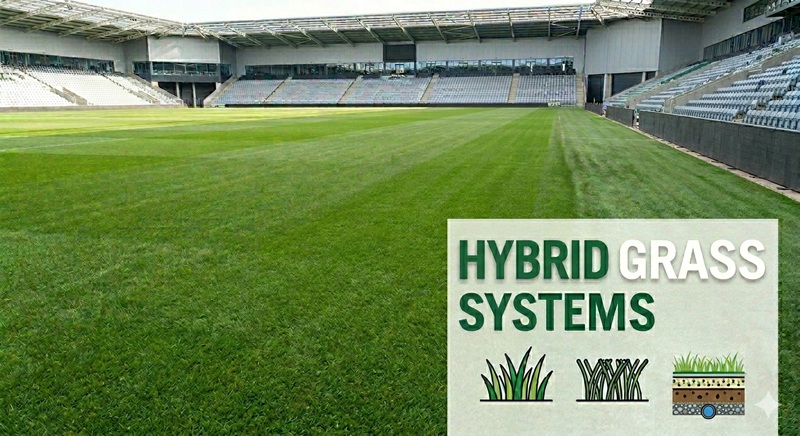
In addition to advances in natural grass management, some leading stadiums have adopted hybrid grass systems to improve durability and surface stability.
These surfaces combine natural grass with synthetic reinforcement fibres, creating a more durable playing field while preserving the characteristics of natural turf.
In a typical hybrid system, millions of artificial fibres are stitched or integrated into the root zone of a natural grass pitch. The natural grass grows around these fibres, which help strengthen the surface and improve resistance to wear.
The result is a pitch that offers many of the qualities players expect from natural grass while providing additional support during periods of intensive use.
Hybrid technology has become increasingly common in professional football because it can help stadium operators maintain surface quality under heavy match schedules and changing weather conditions.
While not every stadium uses a hybrid system, it has become one of several solutions available for supporting pitch performance at the highest levels of the game.
Beyond the Stadium: The Role of Artificial Turf in Modern Football
While World Cup matches are played on natural or hybrid grass surfaces, artificial grass continues to play an important role throughout the global football ecosystem.
In fact, most football players around the world will never compete in a World Cup stadium. They play at schools, universities, football academies, community facilities, training centres, and clubs—many of which rely on artificial turf.
The reasons are practical.
Higher Playing Capacity
Natural grass requires recovery time between matches and training sessions. Excessive use can quickly lead to surface deterioration.
Artificial football turf can accommodate significantly more playing hours while maintaining a consistent surface, making it an ideal solution for facilities with high demand.
Consistent Performance
Weather conditions can dramatically affect natural grass.
Artificial turf provides predictable ball roll, ball rebound, and traction throughout the year, helping facilities deliver reliable playing conditions regardless of season or climate.
Reduced Maintenance Requirements
Maintaining a high-quality natural grass pitch requires ongoing mowing, irrigation, fertilisation, aeration, and specialist labour.
Artificial turf significantly reduces these maintenance demands, allowing facility operators to focus resources elsewhere while still providing a professional-quality playing surface.
FIFA-Certified Football Turf
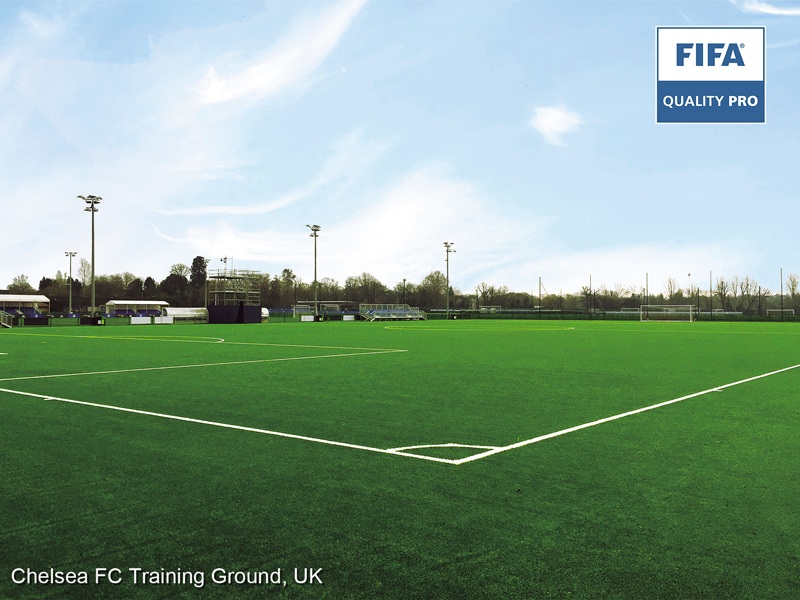
To support football development worldwide, FIFA’s Quality Programme includes testing and certification standards for artificial football turf systems.
These standards evaluate critical performance criteria such as ball roll, vertical ball rebound, shock absorption, rotational resistance, and durability.
FIFA-certified football turf systems help ensure that players can enjoy safe, consistent, and high-performing surfaces beyond the professional game.
As a FIFA Preferred Provider, CCGrass has delivered more than 200 FIFA-certified football turf systems across over 500 certified pitches worldwide, supporting football development across professional clubs, competitive football, academies, and community facilities.
These FIFA-certified systems play an important role in expanding access to football while ensuring consistent playing performance, safety, and durability across different levels of the game.
What Football Facility Owners Can Learn from the 2026 FIFA World Cup
Although most football facilities operate on a very different scale from World Cup venues, the principles behind a successful playing surface remain remarkably similar.
The 2026 FIFA World Cup highlights several key lessons for football facility owners:
- Surface consistency directly influences player experience and game quality.
- Effective drainage is essential for year-round playability.
- Durability must be considered alongside performance.
- Player safety should remain a priority throughout the design and maintenance process.
- Long-term surface quality depends on selecting the right system for the intended level of use.
There is no single surface solution that suits every football facility.
Natural grass, hybrid grass, and synthetic turf each offer distinct advantages depending on budget, climate, usage levels, and maintenance resources.
The most successful projects are those that carefully balance performance, durability, safety, and operational requirements.
Conclusion
As the world’s attention turns to the 2026 FIFA World Cup, the quality of the playing surface will once again play a vital role in the success of the tournament.
From managing diverse climate conditions across three countries to maintaining elite-level performance standards, the tournament showcases the complexity of modern football surface technology.
While World Cup matches will take place on natural and hybrid grass pitches, artificial turf continues to support football development at schools, clubs, training facilities, and community fields worldwide.
Ultimately, the lesson from the 2026 FIFA World Cup is not that one surface is better than another. Rather, it is that every football facility benefits from choosing the right surface for its specific needs—whether that means natural grass, hybrid technology, or FIFA-certified artificial turf.