
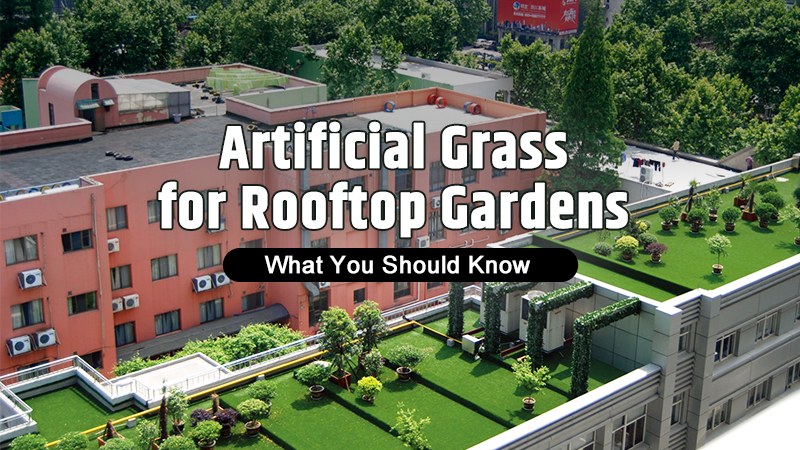
Rooftop spaces are no longer just unused building surfaces. In modern cities where outdoor space is limited, rooftops are increasingly being transformed into gardens, terraces, lounges, and social areas that bring more comfort and greenery into urban environments.
Artificial grass has become a popular solution for these elevated spaces thanks to its natural appearance, low maintenance requirements, and design flexibility. From apartment rooftops to hotel terraces and commercial outdoor areas, rooftop turf makes it easier to create inviting green spaces without the challenges of maintaining natural grass.
At the same time, rooftop projects come with their own requirements. Drainage, waterproofing protection, structural load, and long-term UV exposure all play an important role in selecting the right artificial turf system.
This guide explores the key considerations, benefits, and recommended turf solutions for rooftop gardens and elevated outdoor spaces.
In this article:
Why Artificial Grass Works Well for Rooftop Gardens
Natural grass can be difficult to maintain on rooftops due to limited soil depth, irrigation requirements, and constant exposure to sun and wind. Artificial grass provides a simpler alternative while still creating a comfortable and visually appealing outdoor environment.
Compared with traditional rooftop landscaping, synthetic turf offers several practical advantages:
- Lower maintenance requirements, with no need for mowing, watering, or fertilizing
- Consistent green appearance throughout the year, regardless of season
- Cleaner and more controlled surface conditions for commercial environments
- Reduced long-term maintenance workload for property owners
- Flexible design options for different types of urban rooftop spaces
- A practical way to convert unused rooftops into functional outdoor areas
For many rooftop projects, artificial grass provides a practical balance between aesthetics, usability, and long-term maintenance efficiency.
Synthetic grass can be used across a wide range of rooftop applications, including residential terraces, hotel rooftops, hospitality venues, and commercial podium spaces where outdoor areas need to remain visually consistent and easy to maintain.
Key Considerations for Rooftop Artificial Grass Projects
While artificial grass is highly suitable for rooftop environments, rooftop installations require more planning than standard ground-level landscape projects.
Several technical factors should be evaluated before installation to support long-term performance, drainage efficiency, and rooftop safety.
Structural Load and Weight
Weight is one of the most important considerations in rooftop landscaping.
Traditional rooftop gardens often involve heavy soil layers, irrigation systems, planters, and live vegetation that can add significant structural load to a building. Artificial grass systems are typically much lighter, making them a practical option for many rooftop applications.
For rooftop projects, important considerations may include:
- Turf weight per square meter
- Infill requirements
- Drainage layer weight
- Shock pad thickness
- Total system weight after rainfall
Many rooftop projects use non-infill or low-infill turf systems to help reduce overall weight while simplifying long-term maintenance.
Drainage Performance
Proper drainage is essential for rooftop artificial grass systems. Rooftops must be able to move water away efficiently to help avoid standing water, slippery surfaces, and unnecessary pressure on waterproofing layers.
Artificial grass for rooftop may use perforated backing or fully permeable backing systems to support drainage performance. Perforated backing allows water to drain through designated holes, while fully permeable backing enables water to pass more evenly across the entire surface.
Depending on the rooftop structure, additional drainage layers or ventilation grids may also be installed beneath the turf to help support rooftop water management.
Good drainage design is especially important for hospitality and commercial rooftop environments where outdoor spaces are expected to remain clean, safe, and usable after rainfall.
Waterproofing Protection
Protecting the roof membrane is another important part of rooftop turf installation.
Artificial grass systems should work alongside rooftop waterproofing structures without causing long-term damage. In many projects, protection layers or drainage boards are installed between the turf and the roof surface to help reduce friction and mechanical stress.
Some rooftop installations also use loose-lay systems or limited adhesive application to help preserve waterproofing integrity while maintaining installation stability.
In addition to improving aesthetics and comfort, rooftop artificial grass may also help reduce direct exposure of roofing surfaces to sunlight and weathering over time.
Heat and UV Exposure
Rooftops are exposed to intense sunlight and high surface temperatures throughout the day. Like many outdoor materials, fake grass can become warm under direct sun exposure, especially during hot weather.
High-quality rooftop turf typically incorporates UV inhibitors to help maintain long-term color consistency and fiber durability under continuous sun exposure. Lighter yarn tones and well-designed rooftop layouts may also help create a more comfortable outdoor environment compared with many hard rooftop surfaces such as concrete or tiles.
Fire Performance for Commercial Rooftops
For commercial rooftops and hospitality projects, fire performance may be required depending on local building codes and project safety standards.
Flame-retardant artificial grass is often specified for rooftop environments such as hotels, restaurants, rooftop lounges, and other public-access spaces where safety compliance is a key consideration.
CCGrass roof turf is available with flame-retardant options tested according to international reaction-to-fire standards, helping support project requirements where fire safety is specified.
Depending on the rooftop environment and project requirements, certain turf constructions and backing options may be more suitable for long-term rooftop performance.
Recommended Features for Rooftop Artificial Turf
| Recommendation | Why It Matters for Rooftop Applications |
|---|---|
| Moderate pile height and face weight | Helps balance appearance, comfort, drainage efficiency, and maintenance requirements |
| UV-stabilized yarn | Supports long-term color consistency under strong rooftop sun exposure |
| PU backing with drainage holes | Provides reliable durability and weather resistance while supporting rooftop drainage performance |
| Fully permeable backing | Offers more uniform drainage and lighter construction, though typically at a higher cost |
| Flame-retardant options for commercial projects | Helps meet rooftop safety requirements in hospitality and public-use environments |
Choosing the Right Artificial Grass for Different Rooftop Spaces
Different rooftop spaces require different turf choices depending on how the area will be used, how often it will be accessed, and the overall design expectations of the project.
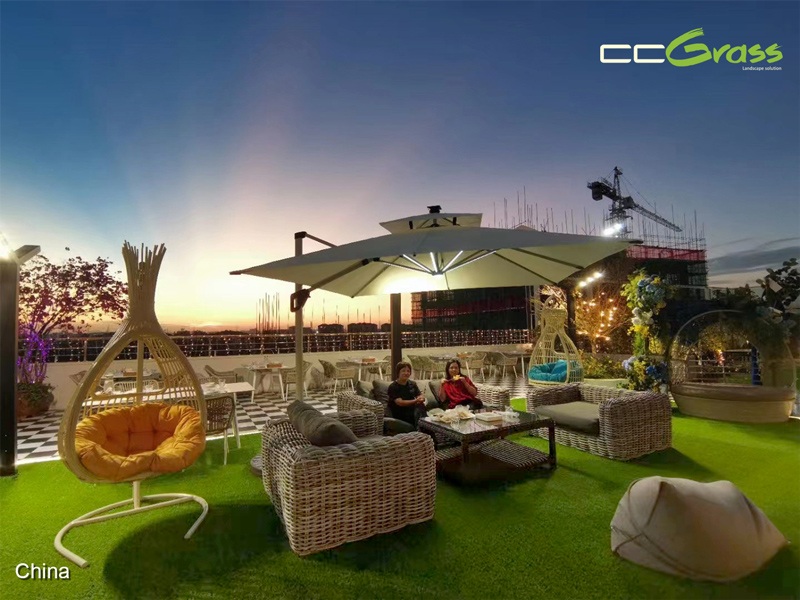
Rooftop Gardens & Residential Terraces
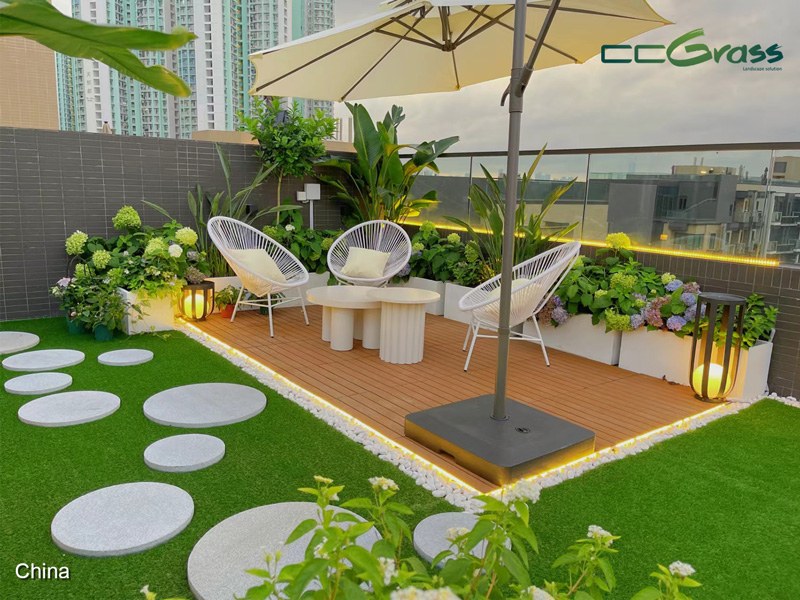
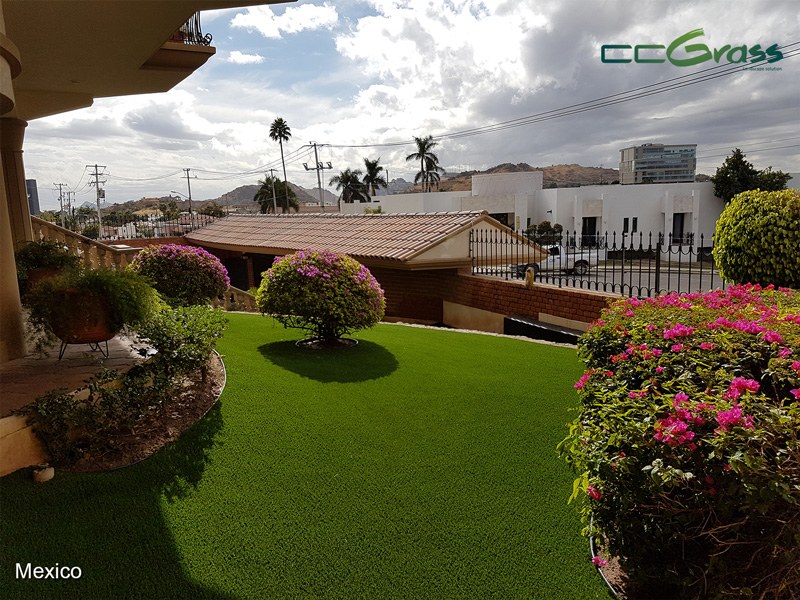
Residential rooftop spaces are typically designed for relaxation, comfort, and visual appeal. In these environments, a softer landscape turf with a natural appearance is often preferred to create a more inviting outdoor atmosphere.
A moderate pile height is commonly used to balance comfort, aesthetics, and long-term rooftop practicality.
One commonly used solution for this type of project is CCGrass Thermalproof Grass Series, designed for rooftop comfort and heat-related performance in residential environments.
- Comfortable underfoot feel
- Helps reduce rooftop heat buildup
- Suitable for long-term outdoor exposure
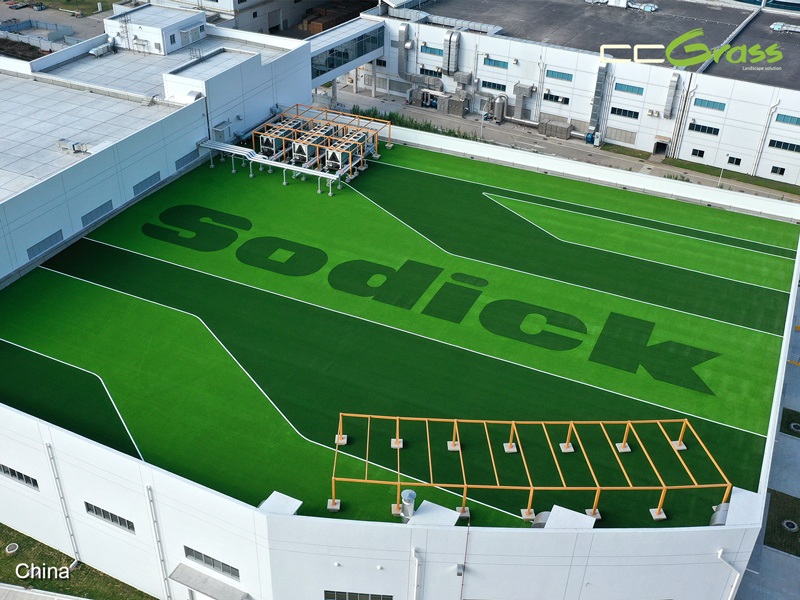
Commercial & Hospitality Rooftops
Commercial rooftops such as hotels, restaurants, office terraces, and lounge areas require turf that can maintain a clean appearance under frequent use.
Durability, low maintenance, and long-term visual consistency are often key priorities in these environments.
CCGrass offers a Roof Grass solution designed for commercial rooftop landscaping applications where appearance retention and practical maintenance are important.
- Create a more distinctive rooftop space
- High durability for frequent use
- Suitable for multi-purpose rooftop environments
Rooftop Leisure & Recreational Spaces
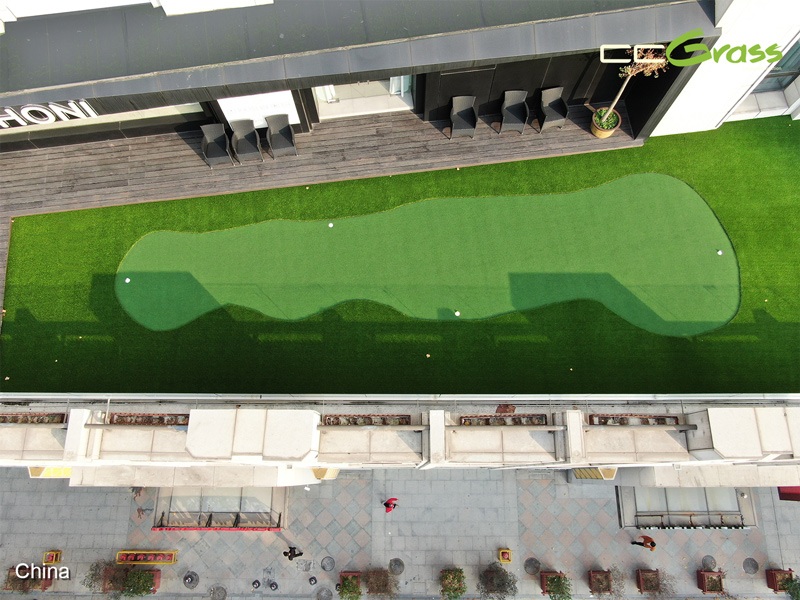
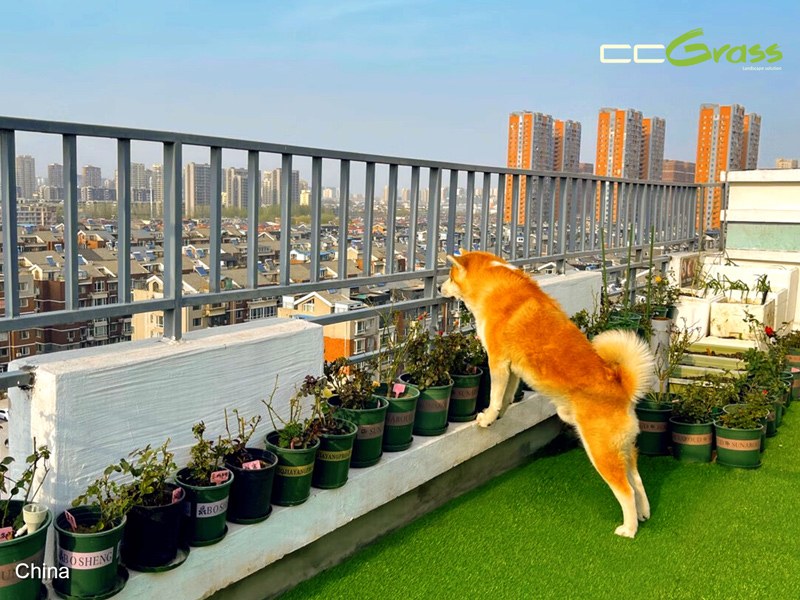
Some rooftop spaces are designed for recreational use such as putting greens, pet areas, or family leisure zones.
In these cases, surface performance and stability are often more important than purely decorative appearance.
One commonly used option is CCGrass FastPro HF, a high-density, low-pile sports turf suitable for rooftop putting greens and recreational applications.
- Consistent putting performance
- Stable and durable surface structure
- Suitable for rooftop golf and recreational layouts
Rooftop Turf Installation Considerations
Rooftop turf installations are often more project-specific than standard ground-level landscaping. Installation methods may vary depending on rooftop structure, drainage design, and wind exposure conditions.
Surface Preparation
Rooftop surfaces commonly include concrete slabs, cement screeds, tiles, or waterproof membrane systems.
Before installation, the rooftop surface should be clean, stable, and properly sloped to support efficient drainage. Existing waterproofing layers should also be inspected carefully to identify any cracks, leaks, or surface damage before the turf is installed.
Drainage & Protection Layers
Proper drainage design is essential for rooftop synthetic turf installations.
Rooftop surfaces should already incorporate an effective waterproofing and slope system to support water runoff.
Depending on the project requirements and rooftop conditions, additional drainage mats, protection boards, or ventilation layers can be used beneath the turf to further improve water management and help reduce moisture retention beneath the system.
Securing the Turf
Rooftop turf may be installed using loose-lay methods, perimeter fixing, or limited adhesive application depending on rooftop conditions and project requirements.
Installation planning should also account for rooftop wind exposure, drainage performance, maintenance access, and future inspection needs.
Maintenance Access
Drainage outlets, inspection points, and rooftop service areas should remain accessible after installation to support long-term water management and routine rooftop maintenance.
Proper installation planning can help simplify future inspections, cleaning, and rooftop servicing work.
Create Functional and Comfortable Rooftop Green Spaces
Artificial grass offers a practical solution for transforming rooftops into attractive and usable outdoor environments while reducing maintenance requirements and supporting long-term durability.
For residential terraces, hospitality rooftops, office outdoor spaces, and commercial landscape projects, selecting the right rooftop turf system is essential for balancing appearance, drainage performance, comfort, and structural efficiency.
CCGrass provides artificial turf solutions designed for modern landscape applications, including rooftop gardens and elevated outdoor spaces, with systems engineered for durability, UV resistance, and long-term aesthetic performance.