

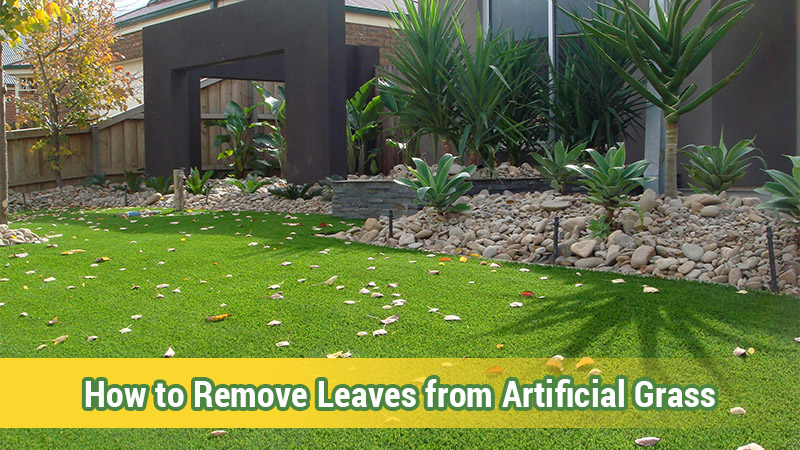
Fall artificial grass maintenance starts with removing fallen leaves and other debris before they build up. Dry leaves are usually easy to clear, but wet leaves and pine needles can become trapped between turf fibers and take more effort to remove.
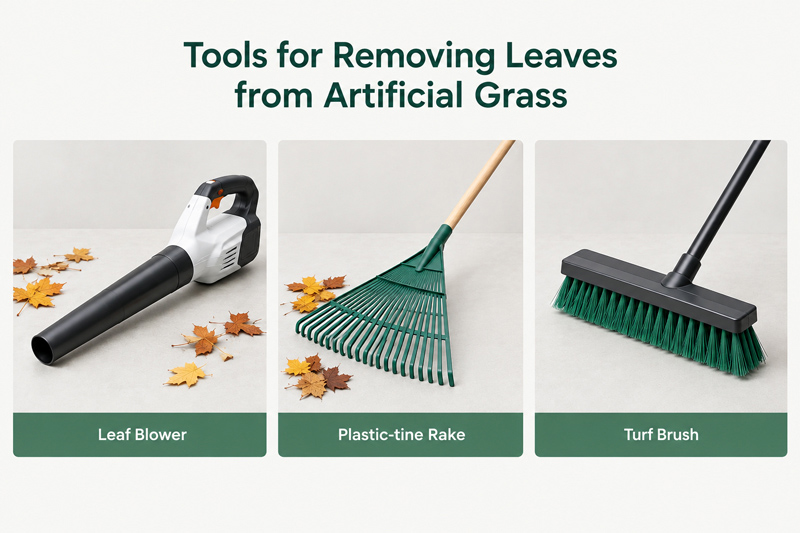
For most residential lawns, a leaf blower is a quick way to clear loose leaves, while a plastic rake or turf brush can help with debris that remains between the fibers. The best method depends on the type of debris, the amount of leaf fall, and whether your artificial grass has infill.
In this article:
What Tools Work Best for Removing Leaves from Artificial Grass?
The right tool makes leaf removal easier and helps protect your artificial grass. For most residential lawns, a few basic tools are enough.
| Tool | Best For | Tips |
| Leaf blower | Dry, loose leaves across larger areas | Start with a low setting, especially on infill turf, to avoid disturbing the infill |
| Plastic-tine rake rake | Wet leaves and compacted debris | Work gently to lift leaves without catching the turf fibers |
| Turf brush | Small debris left behind and flattened fibers | Choose a brush suitable for artificial grass and avoid metal or wire bristles |
Once you’ve chosen the right tool, follow these steps to remove leaves from artificial grass effectively.
- Remove larger debris first. Pick up fallen branches, twigs, and other objects by hand so they don’t catch on the turf during cleaning.
- Blow away loose leaves. Use a leaf blower on a suitable setting, directing the leaves toward a collection point. Work methodically across the lawn rather than scattering debris over areas you’ve already cleared.
- Rake away stubborn leaves. If leaves are wet or packed between the fibers, gently loosen them with a plastic-tine rake. Avoid digging into the turf or scraping its backing.
- Brush and lift the fibers. After removing the leaves, brush the lawn with a stiff-bristled synthetic turf brush. This helps collect fine debris and lift flattened turf fibers across the surface.
- Rinse away fine residue. Inspect corners and beneath trees for accumulated dust, dirt, or organic residue. A light rinse with a garden hose will clear any leftover particles.
Avoid metal-tine rakes, wire brushes, and lawn mowers when removing leaves from artificial grass. Metal tines and wire bristles can damage turf fibers or backing, while mowing over leaves can shred them into smaller pieces that are harder to remove from the turf.
How to Remove Wet Leaves and Pine Needles from Artificial Grass
Wet leaves and pine needles can be harder to remove than dry leaves because they may stick to the fibers or collect in small gaps between them.
For wet leaves: If the leaves are only slightly damp and the weather is expected to dry them out, allowing them to dry can make removal easier. If they’re heavily accumulated or more rain is expected, remove them with a plastic rake, working gently rather than scraping the surface.
For pine needles and small debris: A leaf blower may not remove every needle, particularly around fence lines, beneath shrubs, and in corners. Loosen the debris with a suitable turf brush or plastic rake, then collect it. Several gentle passes may work better than trying to remove everything at once.
For leaf stains: Some leaves release pigments as they break down, which can discolor turf fibers or lighter-colored infill. Remove fallen leaves promptly and follow the manufacturer’s cleaning instructions if stains remain. Avoid harsh chemicals or abrasive tools that could damage the surface.
For other cleaning needs, including spills and pet waste, see our guide on how to clean artificial grass.
How Often Should You Remove Leaves from Artificial Grass?
How often you need to remove leaves depends on the number of trees nearby, the amount of leaf fall, and local weather conditions.
- During peak leaf fall: Check the lawn regularly. Weekly checks are a reasonable starting point for areas with a moderate amount of falling leaves, while lawns beneath dense trees may need more frequent attention.
- After strong winds or storms: Look for leaves, twigs, and other debris that may have collected across the surface.
- In areas with few trees: Occasional checks and cleaning as needed may be sufficient.
Removing leaves in small amounts is usually easier than clearing a thick layer after several rainy days. Adjust your routine to the conditions around your lawn rather than following a fixed schedule.
How to Prepare Artificial Grass for Winter
Before winter arrives, clear any remaining leaves and take a few minutes to inspect your artificial grass.
- Remove accumulated debris. Pay particular attention to shaded corners, fence lines, and areas beneath trees.
- Check seams and edges. Look for lifting edges, separated seams, or visible damage that may require professional attention.
- Check drainage after heavy rain. If water continues to pool after rain, it may indicate an underlying drainage issue that needs further inspection.
- Protect your turf in freezing weather. Let light frost melt naturally and avoid using rock salt or chemical de-icers. If snow needs to be removed, use a plastic shovel or broom rather than metal tools. Avoid walking on icy turf, as the surface can be slippery.
Regular leaf removal is a simple part of seasonal artificial grass maintenance. With suitable tools and timely cleanup, you can keep your lawn tidy through fall and make it easier to maintain as winter approaches.