

How to Choose the Best Artificial Grass for Balcony | Buyer’s Guide
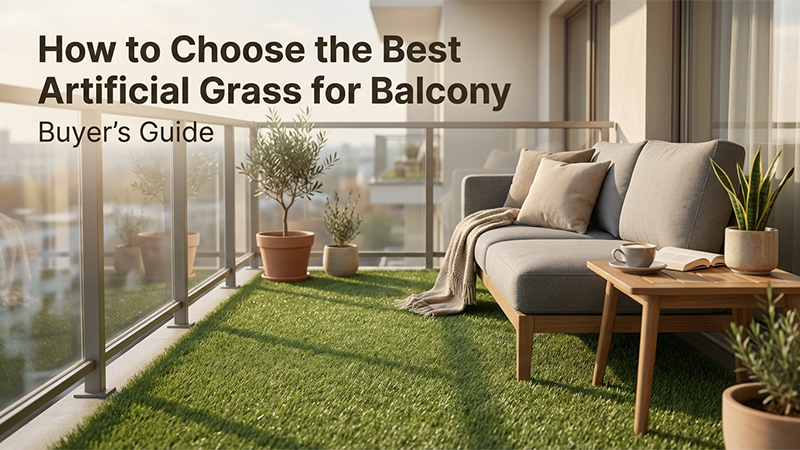
Transforming a balcony into a green, comfortable retreat is no longer limited by space, soil, or maintenance. Artificial grass for balcony use has become a popular solution for apartments and urban homes, offering the look of a natural lawn without the ongoing upkeep. Whether you’re working with a compact enclosed balcony or an open high-rise terrace, the right synthetic turf can dramatically improve comfort, safety, and visual appeal.
This guide walks you through how to choose the best synthetic grass for a balcony, what really matters (and what doesn’t), and how to install it properly for long-lasting results.
In this article:
Why Choose Artificial Grass for a Balcony?
Low-maintenance greenery
Artificial grass on a balcony delivers year-round greenery without mowing, watering, fertilizing, or soil. It’s ideal for busy urban lifestyles and properties where natural grass simply isn’t practical.
Comfort and safety
Compared with tile or concrete, synthetic grass for balcony use provides a softer, more forgiving surface underfoot. It’s more comfortable for relaxing barefoot and creates a safer play area for children and pets.
Flexible design for small spaces
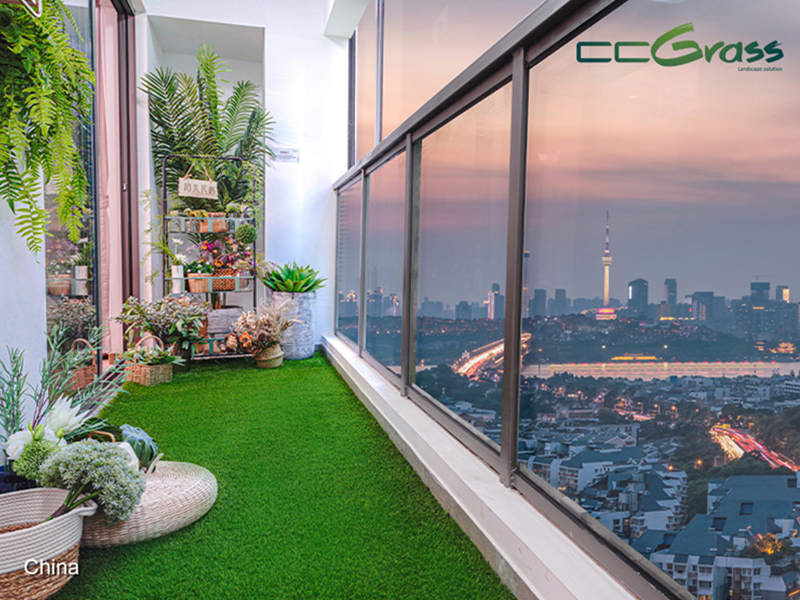
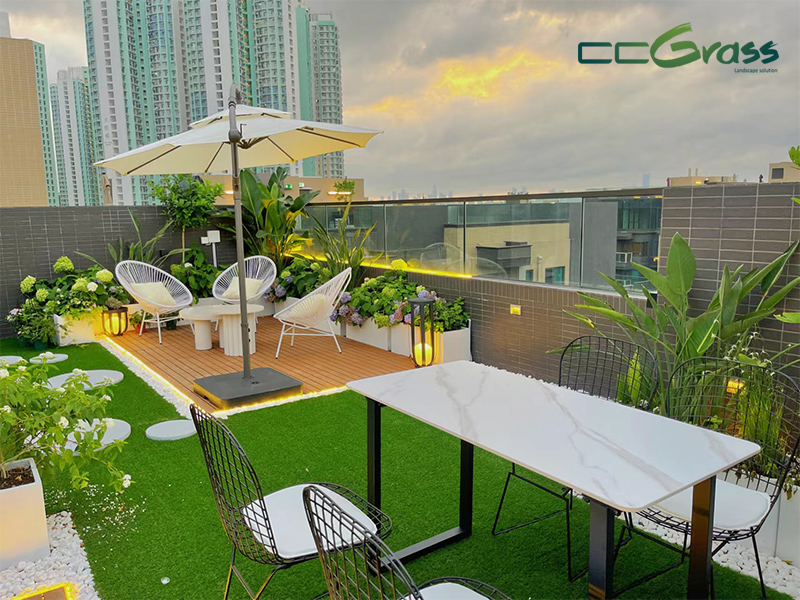
Fake grass for balcony installations can be easily cut to fit tight corners, columns, or irregular layouts. It works well on concrete or tiled floors and pairs naturally with outdoor furniture, planters, and lighting to create a cohesive outdoor living space.
What to Consider When Choosing Artificial Grass for a Balcony?
Choosing artificial grass for a balcony is different from selecting turf for a garden or sports field. These factors matter most in elevated, hard-surface environments.
Fiber material
Artificial grass is typically made from three synthetic fibers:
- Nylon: Extremely durable and heat-resistant, but stiff and less comfortable—often unnecessary for residential balconies.
- Polypropylene (PP): Budget-friendly but less resilient under furniture and foot traffic.
- Polyethylene (PE): Soft, realistic, and durable, making it the most popular choice for balcony turf.
For most balconies, a blend of polyethylene and polypropylene offers the best balance of comfort, appearance, and durability.
Pile height: How tall should balcony grass be?
Pile height affects both appearance and usability.
- 20–25mm: Ideal for pets, frequent use, and easier cleaning.
- 30–35mm: Creates a plusher, more decorative look for relaxation-focused balconies.
Very tall grass may look lush, but it can flatten more easily under furniture, making moderate pile heights better suited for balcony conditions.
Density and durability
Density refers to how many fibers are packed into the turf. Higher-density artificial grass for balcony use:
- Feels fuller and more natural
- Resists wear from daily foot traffic
- Holds up better under chairs, tables, and planters
Realistic appearance
For a natural look, choose artificial grass with:
- Multi-tone green fibers
- A built-in thatch layer of shorter brown fibers
This combination adds depth and helps synthetic grass on a balcony resemble real lawn from both near and far.
Backing and drainage
The backing determines stability, drainage, and lifespan. For balconies, a waterproof, dimensionally stable backing is essential. PU backing is especially suitable for tiled and concrete balcony floors, allowing water to drain while maintaining long-term durability.
Antibacterial artificial turf for balcony use
Balconies used by children or pets benefit from antibacterial turf systems. These help reduce odor, bacteria, and mold growth—especially important in compact or partially enclosed spaces.
Open vs. Enclosed Balconies: What Changes?
Open balconies
- Greater exposure to wind and rain
- Turf may require added weight or secure edges
- Drainage underneath becomes more important
Enclosed balconies
- Easier and faster installation
- Less exposure to weather extremes
- More flexibility in turf thickness and design
Understanding your balcony type helps determine both the turf specification and the installation method.
Best Artificial Grass for Balcony: Recommended Options
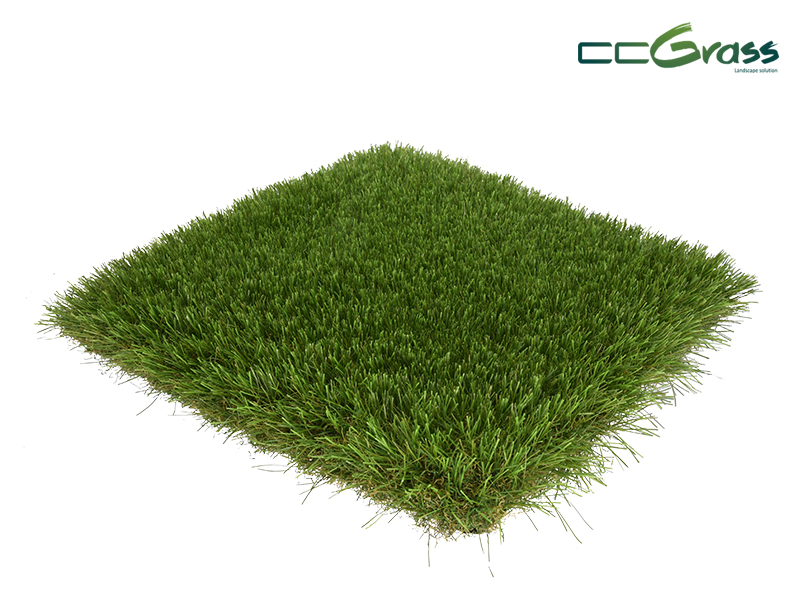
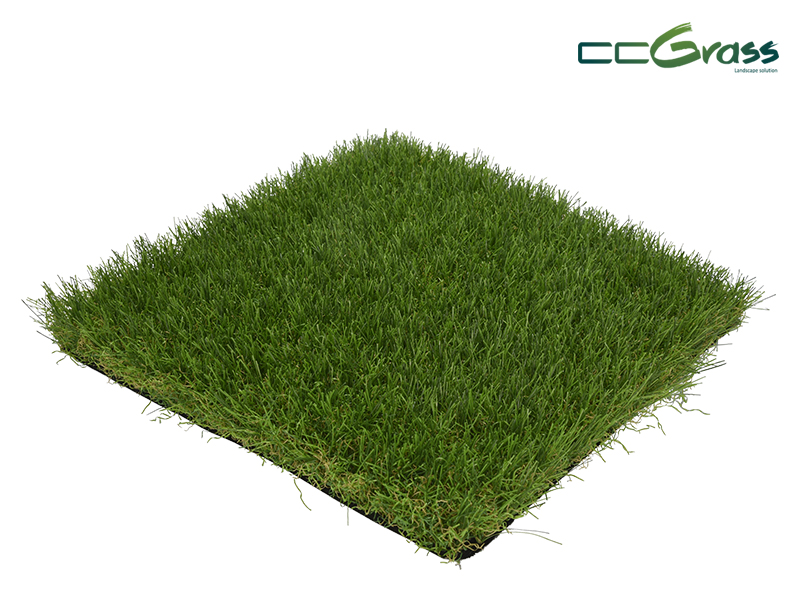
Delicate
Best for: Enclosed balconies focused on aesthetics and décor
- Free-direction yarn for a natural, non-directional appearance
- Soft, refined texture for barefoot comfort
- Blends seamlessly with live plants and balcony furniture
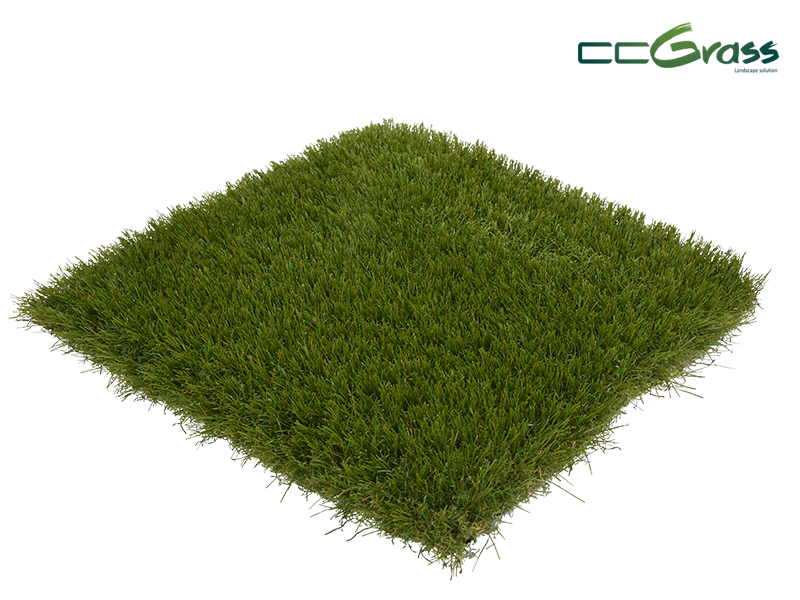
Fluffy
Best for: Family balconies designed for comfort and everyday use
- Rock Tech with Dual-Arch structure for a fluffy, cushioned feel
- Soft and comfortable underfoot
- Enhances a cozy, relaxing balcony atmosphere
Sunny
Best for: Open balconies with stronger sunlight exposure
- Rock Tech C-shape yarn for enhanced resilience
- Dense structure designed for frequent use
- Excellent UV resistance for long-term outdoor performance
A Step-by-Step Guide to Installing Artificial Grass on Your Balcony
Now that you’ve chosen the perfect artificial grass, it’s time for the exciting part: the installation. While it may seem daunting, installing turf on a balcony is a very manageable DIY project. Follow these steps to ensure a smooth, professional-looking result that will last for years.
Before you begin: Key considerations
A little preparation goes a long way. Before you unroll your new lawn, take a moment to assess your balcony to prevent common issues.
- Assess your balcony’s drainage: Most balconies are built with a slight slope and drainage points to handle rain. Check that these are clear and unobstructed. If you notice water tends to pool, you may want to consider adding a drainage underlay before installing the grass.
- Check for sunlight magnification: High-efficiency windows (especially on adjacent or upper floors) can sometimes act like a magnifying glass, reflecting intense sunlight that could melt the turf fibers. To check for this, place a temporary item, like a piece of plastic or a spare turf sample, in any unusually bright spots on a sunny day. If it shows no signs of damage after a few hours, you’re good to go.
- Measure door clearance: If your balcony door swings outward, measure the gap between the bottom of the door and the floor. You’ll need to ensure there is enough clearance (typically at least 1-1.5 inches) to accommodate the height of your turf and any underlay without the door getting stuck.
- Clean the surface thoroughly: This is a critical step! Whether your balcony is concrete, tile, or wood, it must be completely clean, dry, and free of dust, grease, or debris. A thorough sweep and a good scrub will ensure your turf lies flat and any adhesive you use will bond properly.
Choosing your installation method
You have a few options for securing your turf. The best method depends on your balcony type (open vs. enclosed) and how permanent you want the installation to be.
| Installation Method | Pros | Cons | Best For |
| Loose Lay | Simple, fast, no damage to the surface | Can shift or wrinkle; may lift in high winds | Small, enclosed balconies or renters. |
| Adhesive/Glue Down | Very secure, flat, and stable finish | Difficult to remove; can damage the surface underneath | Open, windy balconies; high-traffic areas. |
| Perimeter Taping | Good stability, less permanent than full glue-down | Seams can still lift if not done properly | A good middle-ground for stability and removability. |
The Installation Process
Step 1: Measure and Cut Your Turf
Roll out your artificial grass and let it rest for a few hours to allow any creases from shipping to relax. Measure your balcony dimensions carefully. When cutting the turf, always work from the underside (the backing). Use a sharp utility knife for a clean, precise cut. Remember the golden rule: measure twice, cut once!
Step 2: Position and Join Seams (If Necessary)
If you are using multiple pieces of turf, lay them next to each other, ensuring the pile (the direction of the grass blades) is facing the same way for a uniform look. Fold back the edges where the two pieces meet and apply specialized seam tape on the ground beneath. Then, apply turf adhesive to the tape and carefully press the two turf edges back down, creating a nearly invisible join.
Step 3: Anchor the Artificial Grass
Based on your chosen method, secure the turf:
- For Loose Lay: You’re almost done! Simply place heavy furniture or planters around the perimeter to help weigh the turf down and prevent it from shifting.
- For Perimeter Taping/Full Glue-Down: Fold back the edges of your turf. Apply a high-quality outdoor turf adhesive or double-sided turf tape around the perimeter of your balcony surface. If doing a full glue-down, apply the adhesive in an S-pattern across the entire floor. Carefully roll the turf back into place, pressing down firmly from the center outwards to smooth out any air bubbles.
- For Anchoring to Wood: You can use a staple gun with rust-resistant staples every 6 inches around the perimeter for a secure but less permanent hold than glue.
- For Anchoring to Concrete: Glue or tape is the recommended method. Avoid drilling unless absolutely necessary, as it can compromise the concrete’s integrity.
Step 4: Brush and Finish
Once the turf is secure and any adhesive has had time to dry (check the manufacturer’s instructions, usually 24 hours), use a stiff-bristled broom or a power broom to brush the grass blades against the grain. This helps the fibers stand up, giving you that lush, full, and brand-new lawn appearance.
And that’s it. Watch the simple installation video below to see how easy it is to create a fresh, green balcony with artificial grass.
FAQs About Artificial Grass for Balcony
Here are answers to some of the most common questions we receive about installing and living with artificial grass on a balcony.
Is artificial grass waterproof and how does it handle rain?
Yes, artificial grass is designed to be water-resistant. The turf itself doesn’t absorb water, and it is manufactured with a perforated backing that allows rainwater to pass straight through. As long as your balcony has proper drainage, the water will flow away just as it would on a normal concrete or tile surface.
How to clean artificial grass on a balcony?
Cleaning artificial grass on a balcony is simple and requires minimal effort:
- Remove loose debris: Use a stiff-bristled broom or a vacuum cleaner on a low-power setting to clear dust and leaves.
- Handle occasional spills or accidents: Rinse with water or wipe the area using a damp cloth.
- Deep cleaning (when needed): Clean with mild soap and water, then rinse or wipe with a clean, wet cloth to remove any residue.
For pet owners, artificial grass on a balcony is best used as a leisure surface rather than a primary toilet area. A dedicated pet grass toilet is recommended for regular use.
Can I put heavy furniture or a BBQ grill on my artificial grass?
Yes, you can place outdoor furniture, planters, and other heavy items on artificial grass. The turf is designed to handle weight, although very heavy objects may flatten the blades over time. In most cases, the fibers can be brushed back upright using a stiff broom.
However, BBQ grills and fire pits should not be placed directly on artificial grass. High heat or falling embers can melt the synthetic fibers and cause permanent damage. If you plan to use a grill on your balcony, place it on a heat-resistant mat or a non-combustible surface instead.
Will artificial grass get hot in the sun?
Like any surface exposed to direct sunlight, artificial grass can become warm on hot days. However, modern artificial turf is designed with UV-stabilized fibers that help reduce heat buildup compared to older products and many hard surfaces such as concrete or tiles. Once shaded or lightly rinsed, the surface cools down quickly.
What are the main disadvantages of artificial grass on a balcony?
The main considerations are the initial purchase cost and the potential for heat retention under direct, intense sunlight. That said, many homeowners find these drawbacks are outweighed by the long-term benefits, including minimal maintenance, water savings, and a consistently green appearance. Choosing a high-quality, UV-resistant product and installing it properly can further reduce these concerns.
How long does artificial grass last on a balcony?
With proper care, high-quality artificial turf can last for 8-12 years or even longer. Its lifespan depends on the quality of the material, the amount of foot traffic it receives, and its exposure to the elements. Investing in a durable product with good UV protection is key to ensuring its longevity.
Final Thoughts
Selecting the right artificial grass for balcony use comes down to understanding your space, usage needs, and exposure conditions. By focusing on balcony-specific factors—fiber type, pile height, density, backing, and installation method—you can create a comfortable, durable, and visually appealing outdoor retreat.
With the right synthetic grass and thoughtful installation, even the smallest balcony can become a green, inviting extension of your living space.