
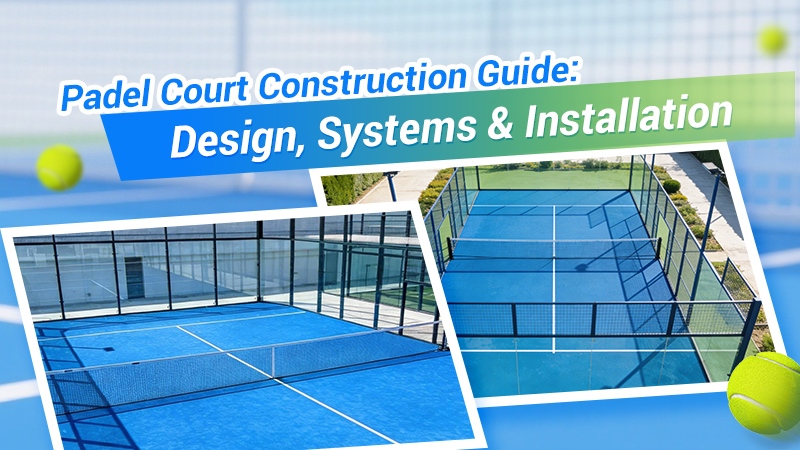
Padel is one of the fastest-growing sports in the world, driving increasing demand for professional padel court construction across clubs, sports facilities, hotels, and private residences. As the sport continues to expand globally, building a high-quality padel court has become both a strategic investment and a way to meet rising player expectations.
However, constructing a padel court involves more than just installation. It requires careful planning of dimensions, structural components, artificial turf systems, lighting, and long-term performance considerations.
This guide provides a complete overview of padel court construction, covering official dimensions, key materials, step-by-step installation, cost factors, and maintenance tips—helping you build a durable, high-performance, and future-ready court.
In this article:
What Is a Padel Court?
A padel court is an enclosed playing area designed for padel, a racquet sport that combines elements of tennis and squash. The court is smaller than a tennis court and features glass walls and mesh fencing, which are actively used during gameplay to create dynamic and strategic rallies.
Padel is typically played in doubles, emphasizing teamwork, control, and placement rather than power. Its simple rules and engaging gameplay have made it one of the fastest-growing sports worldwide, driving increasing demand for padel court construction in sports clubs, resorts, and private facilities.
Official Padel Court Dimensions
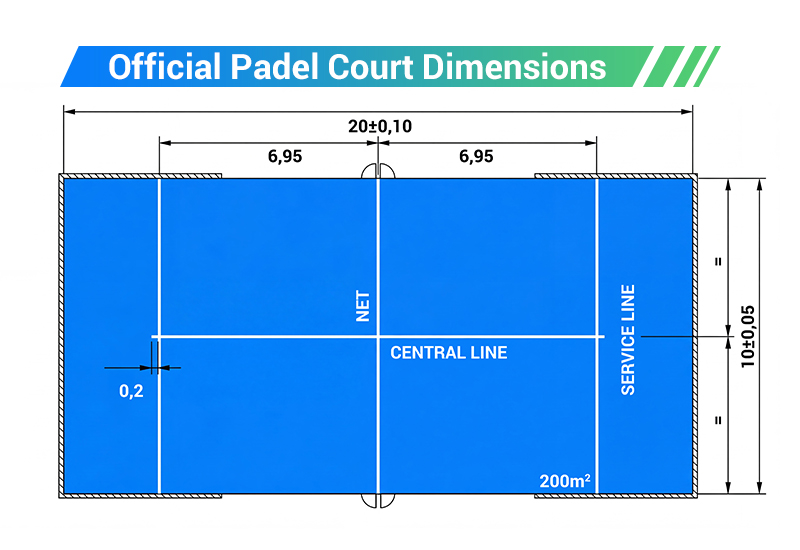
Building a padel court to international standards is essential for ensuring consistent gameplay and suitability for official competitions. The International Padel Federation (FIP) defines the official dimensions for padel courts, which are widely adopted as the industry standard for professional and commercial projects.
Standard Padel Court Dimensions
| Element | Measurement |
| Court Length | 20 m |
| Court Width | 10 m |
| Total Playing Area | 200 m² |
| Net Height (Center) | 0.88 m |
| Net Height (Post) | 0.92 m |
| Service Line Distance | 6.95 m from the net |
Playing Area and Service Lines
A regulation padel court measures 20 meters in length and 10 meters in width, based on internal dimensions within the enclosure. A small construction tolerance is generally acceptable, typically around ±0.10 m in length and ±0.05 m in width. The court is divided into two equal halves by a central net.
Service lines are positioned 6.95 meters from the net on each side, creating the service boxes used during gameplay. All court markings must be clearly visible, consistent in width, and designed to maintain accuracy during fast-paced rallies.
To ensure safety and accessibility, additional space beyond the playing area is recommended. Typically, a clearance of 0.5 to 1 meter around the court is required, bringing the total footprint to approximately 22 × 12 meters.
Ceiling Height Requirements
For indoor padel courts, ceiling height is an important design consideration. A minimum height of around 6 meters is generally required to allow comfortable play, while 8 meters is recommended for professional or newly built facilities to ensure optimal ball movement and player experience.
Net Specifications
The net plays a critical role in gameplay and must meet the following standards:
- Center height: 0.88 meters
- Post height: 0.92 meters
- Full width: 10 meters
A properly tensioned net ensures consistent ball behavior and fair play.
Wall Configuration
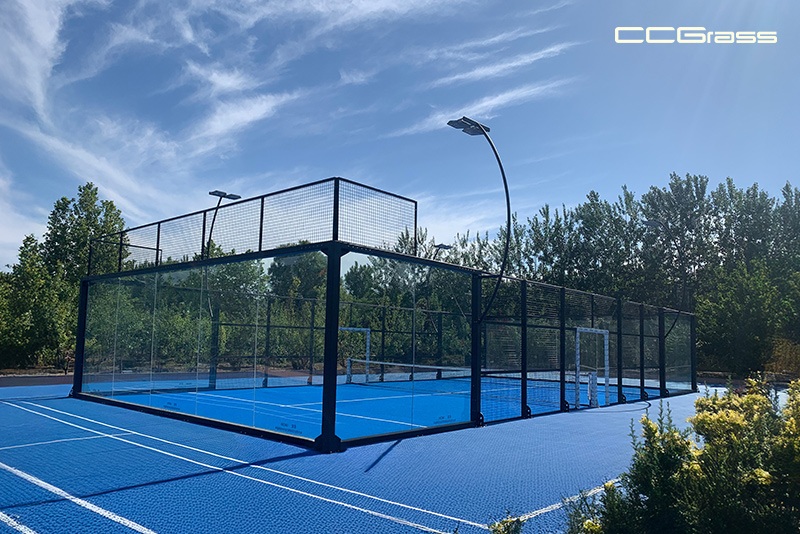
One of the defining features of a padel court is its enclosed structure, combining glass and mesh elements:
- Back walls: 4 meters high, typically made of tempered safety glass across the full width
- Side walls: A combination of glass and mesh, with the first 4 meters from the back featuring 3-meter-high glass, followed by the remaining length constructed with 2-meter-high metal mesh
This design allows controlled ball rebounds, which are essential to padel gameplay.
Access Points
Two symmetrical openings are located along the side walls near the net, allowing players to enter and exit the court without doors.
These standardized dimensions and structural elements ensure consistent playing conditions and define the unique dynamics of padel.
Key Components of a Padel Court
While standard dimensions define the layout of a padel court, its performance and durability depend on the quality and design of its key components. Each element plays a specific role in ensuring safety, consistency, and long-term reliability.
Foundation & Drainage
The base is the “unsung hero” of playability.
- The Base: A reinforced concrete or porous asphalt foundation, perfectly leveled.
- Smart Drainage: An integrated 0.5%–1% slope combined with perimeter channels ensures the court is “ready-to-play” minutes after a heavy downpour, protecting the turf’s adhesive layers from water damage.
Structure & Framework
As the court’s structural skeleton, this framework supports the entire enclosure—including glass panels, mesh fencing, and connecting hardware—to ensure maximum stability.
- Anti-Corrosion: Galvanized and powder-coated steel, together with durable fasteners, helps improve corrosion resistance and long-term structural reliability.
- Wind Resistance: A well-engineered structure is designed to perform more reliably under wind exposure and changing outdoor conditions.
Glass & Metal Mesh Walls
The enclosure is a functional part of the game, influencing both ball rebound and visibility around the court.
- Tempered Safety Glass: Usually available in 10 mm or 12 mm thickness (EN12150-2), it provides the impact resistance needed for intensive play while maintaining clear visibility.
- Metal Mesh Panels: Electro-welded mesh supports ventilation and forms an essential part of the court enclosure.
- Seamless Integration: A flush transition between glass and mesh helps support more consistent ball rebound and improves player safety.
Artificial Turf Surface
The most touched component, defining both speed and player safety.
- Texturized (Curly) Turf: Texturized Turf is widely used in modern padel courts, offering superior multidirectional traction with less sand maintenance.
- Player Comfort: High-density fibers that reduce joint stress and provide a professional-grade ball slide.
Professional Lighting & Net
- LED Lighting: Padel courts typically use multi-pole LED lighting systems to provide even illumination across the playing area.
- Net System: The net should meet official height requirements and maintain reliable tension during regular use.
Choosing the Right Artificial Turf for Padel Courts
Artificial turf plays a critical role in padel court performance, directly influencing ball behavior, player movement, and overall playing experience. Choosing the right turf system is essential to achieving the right balance between speed, grip, and long-term durability.
Key Factors to Consider
When selecting artificial turf for a padel court, several factors should be considered:
- Pile Height: Typically around 10–15 mm, shorter fibers provide faster gameplay, while slightly longer fibers offer more cushioning and control.
- Fiber Type: Texturized (curly) yarns are widely used in modern courts, offering better multidirectional traction and improved stability.
- Density and Stitch Rate: High-density turf ensures consistent ball bounce and better wear resistance over time.
- Infill System: Silica sand is commonly used to stabilize the fibers, regulate ball speed, and enhance player grip.
Professional Padel Turf Options
As a FIFA, FIH, and World Rugby Preferred Provider, CCGrass brings world-class fiber technology to the padel court. Our surfaces undergo rigorous Max UV Defense testing (UVA 5000h / UVB 3000h) to ensure outstanding color stability and structural integrity, even in extreme outdoor environments. The dense, ultra-flat turf surface delivers consistent ball response and superior wear resistance, meeting the professional standards recognized by FEP.
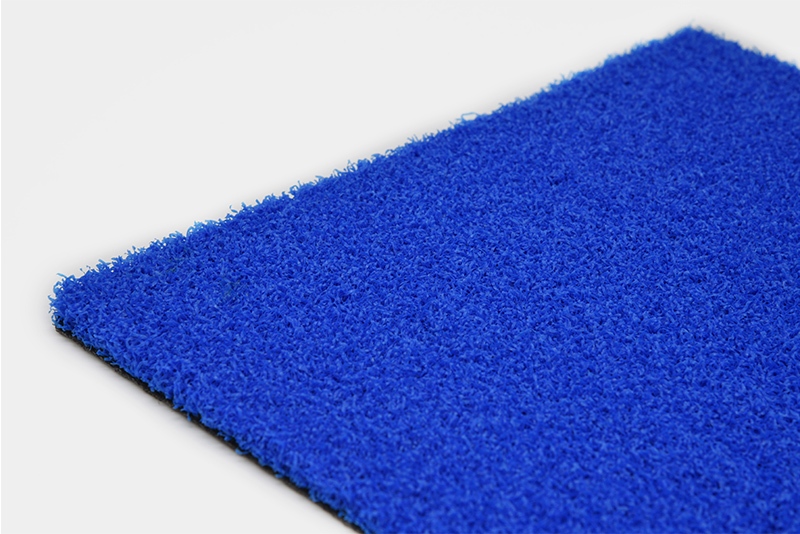
FASTPRO
- Curly monofilament
- High density
- Blue & more colors available
- Excellent sports performance
- Best For High-traffic commercial centers
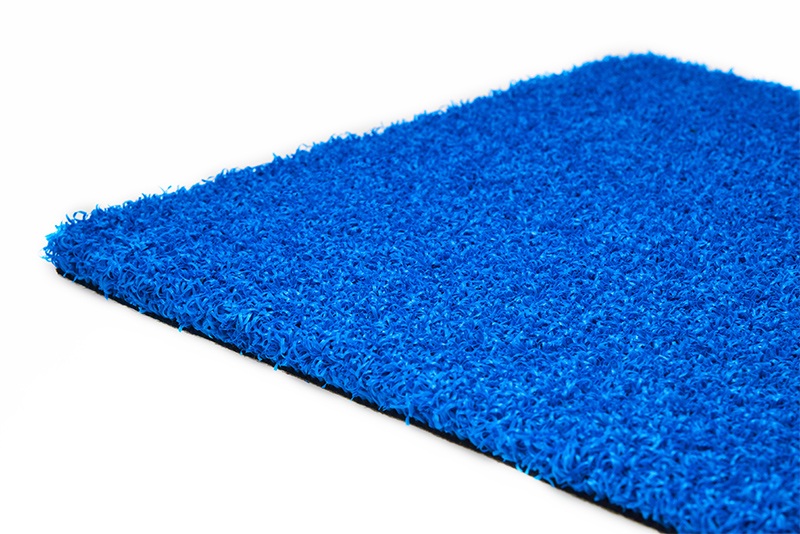
PACEPLAY
- Rock Tech monofilament
- High density
- Blue & more colors available
- Top-level sports performance
- Best For Elite clubs and tournaments
The All-in-One Padel Court Solution
Building a professional padel facility involves complex coordination between structural engineering, material selection, and surface performance. To simplify this process, CCGrass offers an integrated padel court solution in which every major component—from panoramic glass panels to the structural framework, artificial turf, lighting, and net system—is pre-engineered for compatibility.
By treating the court as a complete system rather than a collection of separate parts, this approach helps improve installation accuracy, reduce on-site errors, and support the performance standards expected of professional play. For clubs, sports facilities, and commercial developers, it provides a more efficient and reliable way to deliver high-quality padel court projects.
Step-by-Step Padel Court Construction Process
Building a high-quality padel court requires more than assembling individual components. From site preparation to final installation, each stage must be carefully planned and executed to ensure structural stability, player safety, and long-term performance.
Site Preparation and Planning
The process begins with evaluating the site conditions, including ground stability, drainage requirements, available space, and accessibility for installation. At this stage, project planners also confirm whether the court will be used for recreational, club, or competition purposes, as this may influence specifications such as lighting, ceiling height, and surrounding clearance.
Foundation and Base Construction
Once the site is prepared, the next step is to construct the base. A reinforced concrete slab or porous asphalt base is typically used to provide a stable and level foundation for the court system. Proper slope and drainage design are essential at this stage to prevent water accumulation and to protect the long-term performance of the turf and structural components.
Structural Frame Installation
After the base is completed, the steel framework is installed. This structure forms the backbone of the court and supports the glass walls, metal mesh panels, and net system. Accurate alignment is critical to ensure overall stability and smooth integration of all enclosure elements.
Glass and Mesh Enclosure Installation
The tempered glass panels and metal mesh walls are then installed according to the court design. These elements must be securely fixed and precisely aligned to ensure safe play, consistent ball rebound, and long-term structural reliability. At this stage, access openings and enclosure details are also completed.
Artificial Turf Installation
With the enclosure in place, the artificial turf system is installed over the prepared base. This includes laying the turf, securing the joints, applying infill sand, and brushing the fibers to achieve even distribution. Proper installation is essential for maintaining consistent ball bounce, player traction, and surface durability.
The video below shows a simplified turf installation process on a smaller padel court setup, focusing on the surface layer.
Lighting and Final Accessories
The final stage includes installing the lighting system, net posts, net, and any additional accessories required for operation. Once all components are in place, the court undergoes final inspection and adjustment to verify alignment, tension, surface condition, and overall construction quality.
When each step is carefully executed, the result is a professional padel court that delivers reliable performance from the first match onward.
How Much Does It Cost to Build a Padel Court?
The cost of building a padel court can vary significantly depending on the project scope, court type, material specifications, and site conditions. Rather than focusing on a single price, it is more useful to understand the main factors that influence the overall investment.
Main Factors That Affect Cost
Several variables can have a direct impact on padel court construction costs.
- Court Type
Panoramic courts generally cost more than standard courts, while indoor projects may require additional investment in building structure, ventilation, and lighting.
- Material Specifications
The choice of materials for the framework, glass thickness, lighting system, and especially the artificial turf (e.g., professional vs. recreational grade) will directly impact the total investment.
- Site Conditions
Ground preparation, leveling, excavation, and drainage requirements can significantly affect the total budget, especially for outdoor installations.
- Project Location
Labor rates, freight costs, local regulations, and material availability vary by region and can influence the final cost considerably.
- Additional Facilities
Extras such as canopies, seating areas, fencing, or surrounding amenities will increase the overall investment.
Cost Efficiency and Long-Term Value
When evaluating cost, it is important to look beyond the initial purchase price. A lower-cost solution may reduce upfront spending, but it can also lead to higher maintenance needs, shorter service life, or performance issues later on.
For many projects, the better investment is a well-coordinated system that delivers reliable performance and lower operational risk over time. Working with an experienced supplier such as CCGrass can also help simplify procurement, improve component compatibility, and reduce installation errors.
For clubs and sports facilities, a padel court is not only a construction expense but also a long-term revenue-generating asset. With growing demand and high utilization potential, a professionally built court can support income through rentals, memberships, coaching, and events.
Ultimately, the most cost-effective padel court is not simply the cheapest one to build, but the one that offers the best balance of quality, durability, and long-term return.
Padel Court Maintenance Tips
Consistent maintenance helps keep a padel court safe, clean, and consistent in play. A simple, regular routine can reduce wear, maintain surface performance, and protect the long-term value of the court.
| Frequency | Key Tasks | Pro Tip |
| Daily | Remove leaves, dust, and debris from the court surface. | Use a blower or soft broom to avoid unnecessary wear. |
| Weekly | Brush the turf to redistribute sand and check net tension. | Pay extra attention to the baseline, corners, and access points. |
| Monthly | Clean the glass and inspect the frame, mesh, and bolts. | Fix minor issues early before they affect safety or playability. |
| 6–12 Months | Check turf condition, infill levels, lighting, and overall structure. | A professional inspection can help extend the court’s service life. |
With regular care and timely inspection, a padel court can remain reliable, attractive, and ready for consistent play for many years.
Conclusion
Padel court construction is a specialized process that brings together official dimensions, quality materials, precise installation, and ongoing maintenance. From the foundation and structural framework to the artificial turf and lighting system, each element plays a role in the court’s long-term performance and player experience.
For clubs, sports facilities, and commercial developers, a well-planned padel court is more than a sports installation—it is a long-term investment with strong usage and revenue potential. Taking an integrated approach can help simplify construction, reduce operational risk, and deliver more reliable results over time.
If you are planning a padel court project, CCGrass can help with professional padel court solutions tailored to different project needs. For more information, contact us at [email protected] or call +86-25-69811666.