

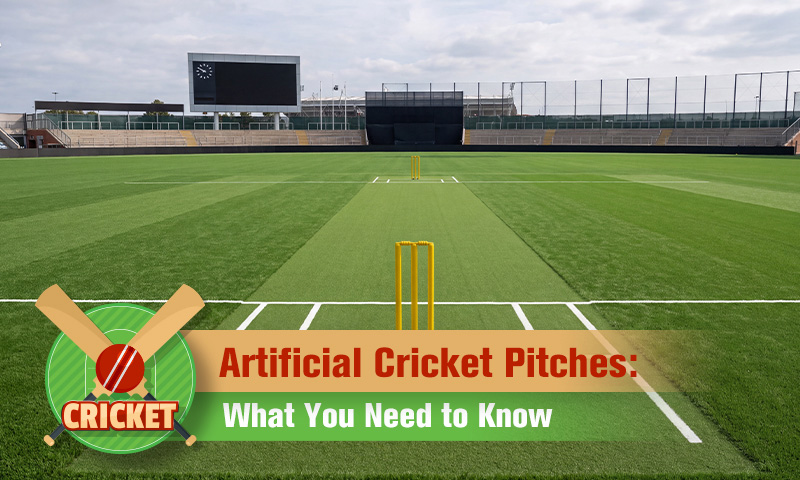
Artificial turf is used for cricket pitches, particularly at schools, clubs and community facilities where regular training and frequent use are priorities. Synthetic turf is also used in practice nets and indoor cricket facilities, and selected systems can be suitable for cricket outfields.
This guide explores the main types of cricket pitch surfaces, the applications of artificial cricket turf and key factors to consider when selecting a suitable system.
In this article:
What Is a Cricket Pitch?
A cricket pitch is the central rectangular area of a cricket ground where most of the action between the bowler and batter takes place. It is where the ball is delivered, bounces and is played, making its surface an important factor in the game.
According to the Laws of Cricket, a standard pitch measures 22 yards (20.12 metres) in length and 10 feet (3.05 metres) in width. These dimensions are consistent across standard cricket formats, although the surrounding playing area may vary between grounds.
It is useful to distinguish between three related terms:
- Cricket Pitch: The central playing strip where the bowler delivers the ball and the batter plays.
- Cricket Ground: The entire playing area, including the central pitch and surrounding outfield.
- Outfield: The area between the pitch and the boundary, where fielders move to stop or retrieve the ball.
Types of Cricket Pitches by Surface Type
Cricket pitches can be classified by their playing conditions or surface construction. Terms such as hard, soft, green and dusty describe how a pitch behaves and may influence pace, bounce and seam movement. From a surface perspective, three common types are natural grass, artificial turf and hybrid systems.
Natural Grass Pitches
Natural grass pitches are the traditional playing surface in cricket. They are typically prepared using a clay-rich soil profile, which can be compacted and managed to produce the required pace, bounce and ball response.
The playing characteristics of natural turf depend heavily on soil properties, moisture, weather and pitch preparation. Maintaining suitable conditions requires skilled ground staff, regular preparation and time for recovery between matches. This can make natural grass demanding for facilities with frequent use or limited groundskeeping resources.
Artificial Turf Pitches
Artificial cricket pitches use synthetic turf carpet installed over a firm, stable base, often a concrete slab. A typical artificial cricket pitch features a short-pile, high-density synthetic carpet without infill.
Its playing characteristics depend on factors such as pile height, yarn structure, turf density and the supporting base. Unlike natural grass, synthetic turf does not rely on grass growth or seasonal recovery. It requires less grass-related maintenance, making it a practical option for schools, clubs, community grounds and practice facilities that need regular access to the playing surface.
Hybrid Cricket Pitches
Hybrid cricket pitches combine natural grass with synthetic reinforcement, commonly through fibres stitched into the soil profile. The grass remains the primary playing surface, while the synthetic fibres help reinforce the pitch structure and improve its resistance to wear.
Hybrid systems are particularly relevant to natural turf grounds that experience frequent play. The reinforcement can help maintain grass coverage and reduce wear, but the surface still requires natural turf preparation and maintenance. Its performance also depends on soil conditions, installation and ongoing groundskeeping.
Comparing the Three Types of Cricket Pitches
| Comparison Factor | Natural Grass | Artificial Turf | Hybrid |
| Playing Surface | Natural grass | Synthetic turf | Grass reinforced with synthetic fibres |
| Ball Response | Varies with grass and soil conditions | Depends on turf construction and base | Influenced by grass, soil and preparation |
| Maintenance | Regular grass care and pitch preparation | No grass growing or mowing; routine turf upkeep still required | Grass care plus reinforcement maintenance |
| Use & Recovery | Requires recovery time between matches | Does not require grass recovery, allowing more regular use | Natural grass still needs time to recover |
| Common Applications | Traditional cricket grounds | Schools, clubs and practice facilities | High-use natural turf grounds |
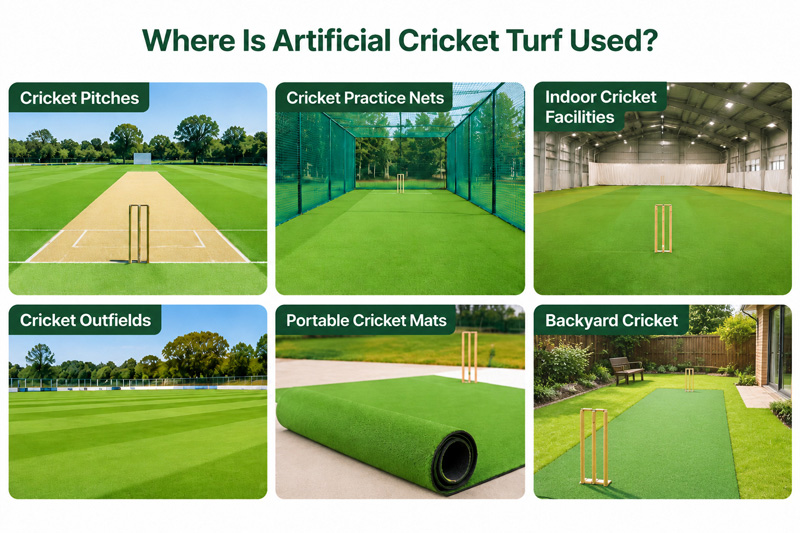
Where Is Artificial Cricket Turf Used?
Artificial cricket turf is used in different parts of cricket facilities, from central playing pitches to larger outfield areas and dedicated training spaces. The turf system and its requirements vary depending on the intended application.
Cricket Pitches and Wickets
Artificial turf is commonly used for non-turf cricket pitches, providing a dedicated central playing strip within a cricket ground. These pitches can serve as match surfaces or practice areas, depending on the facility and applicable playing requirements.
They are particularly useful for schools, clubs and community grounds that need accessible playing surfaces for regular cricket activities. Synthetic pitches can also be incorporated into existing natural grass grounds, allowing facilities to provide additional playing and training opportunities.
Cricket Practice Nets
Cricket practice nets are enclosed training lanes where players practise batting and bowling. Artificial turf is often installed as a dedicated pitch surface within these lanes, allowing players to repeat drills without requiring access to a full cricket ground.
These facilities are commonly found at schools, cricket clubs and training academies. Multiple practice lanes can be arranged side by side to accommodate individual coaching sessions and group training.
Indoor Cricket Training Facilities
Indoor cricket facilities provide dedicated spaces for year-round practice, coaching and, in some cases, indoor matches. They may include practice-net lanes, central wicket training areas and other designated cricket playing spaces.
Artificial turf can be used for pitch surfaces within indoor practice areas, depending on the facility layout and training requirements. These installations allow players to continue batting and bowling practice regardless of outdoor weather conditions.
Cricket Outfields
Artificial turf can also be used across the cricket outfield, the larger playing area surrounding the central pitch. Unlike the short-pile carpet used for a synthetic cricket pitch, an outfield system is designed for a much broader playing surface.
Key considerations include ball roll and bounce, player traction, surface hardness and durability. In Australia, for example, Cricket Australia and the AFL have established a product licensing program for synthetic turf used across the field of play, including cricket outfields. This demonstrates that artificial turf can be an option for community-level cricket grounds, subject to relevant performance and safety requirements.
Portable Cricket Mats
Portable cricket mats are roll-out synthetic surfaces that provide a temporary playing area without permanent installation. Easily transported and stored, they can be laid over suitable existing surfaces, such as indoor courts, multi-use games areas (MUGAs) and hard outdoor courts. They offer schools, multi-sport venues and clubs a flexible way to create additional cricket practice areas.
Backyard Cricket
Artificial turf can also be used to create a cricket practice area in residential backyards. It offers a consistent playing surface for casual games and recreational practice, making it an option for homeowners looking to add cricket activities to their outdoor spaces.
How to Choose Artificial Cricket Turf
Artificial turf for a cricket wicket and an outfield has different requirements. Before comparing products, identify the intended application and check whether the complete turf system is suitable for that use.
Key Factors to Consider
| What to Check | Cricket Pitch / Wicket | Cricket Outfield |
| Turf Profile | Short-pile, high-density carpet, generally without infill. Common pile heights are around 8–12mm. | Usually a longer-pile system, which may use sand or rubber infill and a shock pad. |
| Ball Performance | Consistent ball pace and bounce along the playing strip. | Even ball roll and rebound across the outfield. |
| Player Interaction | A firm, even surface with suitable traction for cricket footwear. | Suitable traction, surface hardness and shock absorption for running, turning and fielding. |
| Base and Drainage | Check the required base type, surface levelling and whether a shock pad is part of the system. | Check the complete base build-up, drainage, infill and shock pad requirements. |
CCGrass FastPro Series for Cricket Pitches
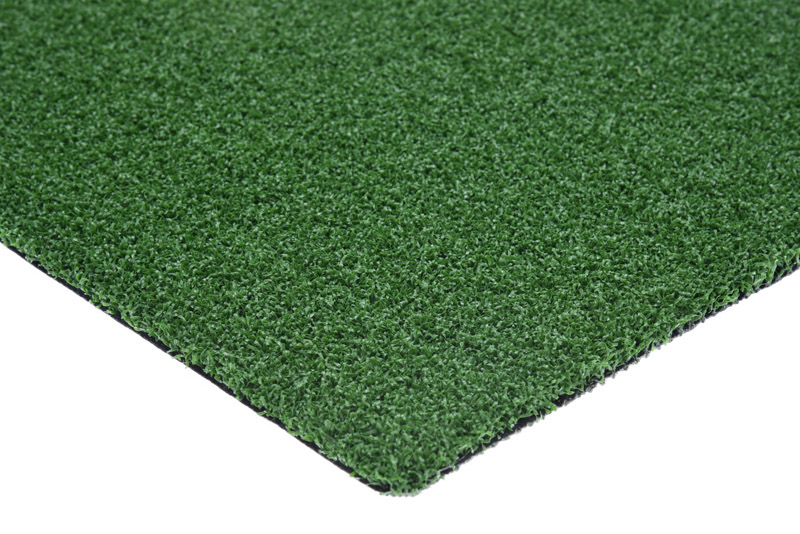
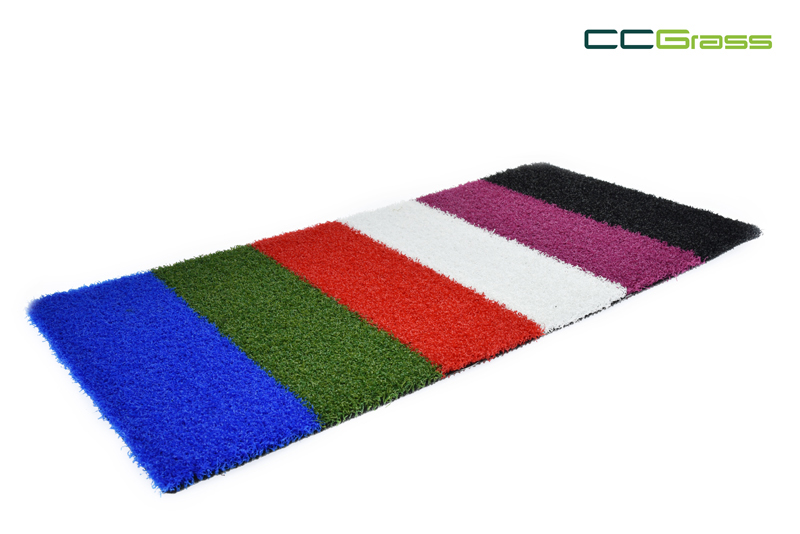
For projects considering a short-pile synthetic cricket pitch, the CCGrass FastPro Series includes a 10mm option made with 100% PE curly monofilament yarn. Its compact turf construction offers several features relevant to cricket pitch applications:
- Dense stitch construction: Creates a compact turf surface with a uniform appearance.
- Smooth surface finish: Provides a smooth surface for ball contact during cricket practice and play.
- UV stability and durability: Helps the turf withstand outdoor exposure and regular use.
- Multiple color options: Available in a range of colors to suit different sports facilities and design preferences.
CCGrass Stemgrass EX2 Series for Cricket Outfields
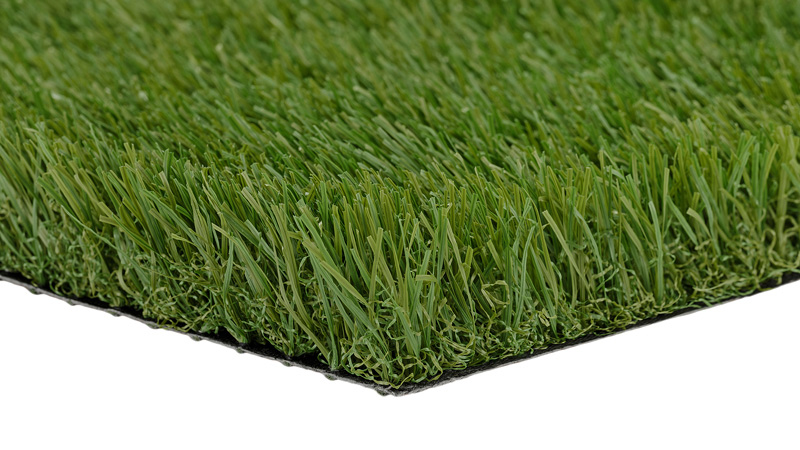
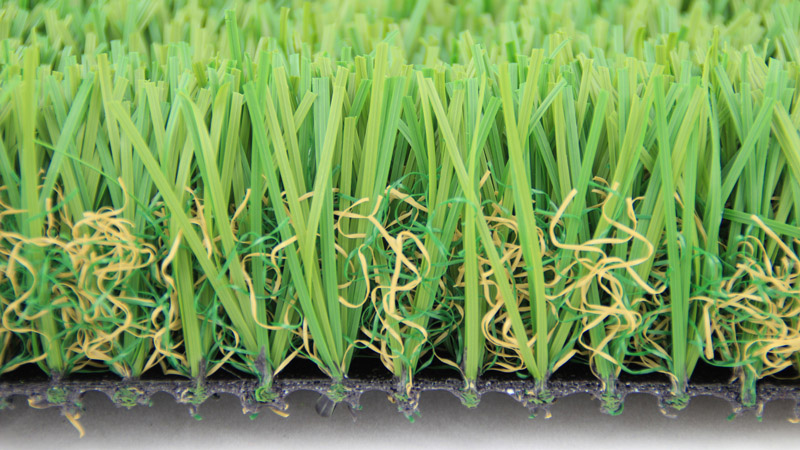
For projects considering artificial turf for cricket outfields, CCGrass Stemgrass EX2 combines monofilament fibres with curly yarn to create a sports turf surface with several features relevant to outfield use:
- Monofilament and curly yarn combination: Combines two yarn types to create a structured turf surface for regular sports use.
- Improved infill retention: Helps keep infill within the turf, supporting more consistent infill distribution across the playing surface.
- More natural foot feel: Offers a more natural feel underfoot, providing comfort for players moving across the outfield.
Looking for Artificial Cricket Turf?
If you are planning an artificial cricket pitch or exploring turf options for a cricket facility, CCGrass can help you find a suitable solution. Contact our team for product information, project consultation or turf samples to evaluate the options for your project.